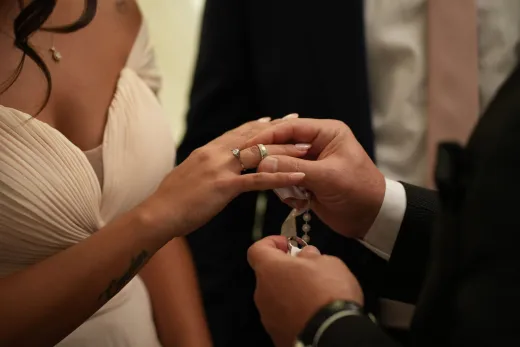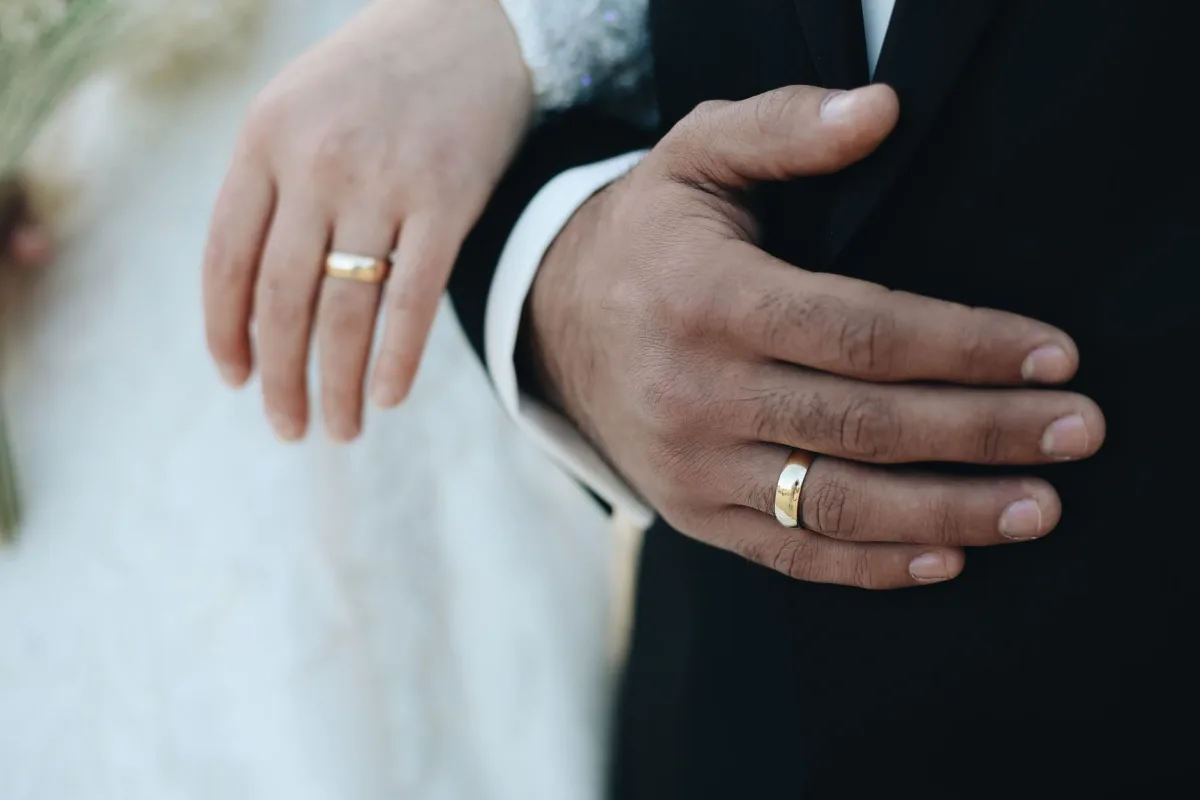
Kay Jewelers Wedding Rings: The Complete Guide
What a large mall jeweller like Kay actually offers, and the financing, warranty and certification questions worth asking before you sign.
Kay Jewelers is one of the first names many American couples think of when the search for wedding rings begins, largely because it is everywhere: in malls, online, and on television with a slogan most people can finish from memory. This guide takes an honest, brand-neutral look at what buying wedding rings from a large mall jeweller like Kay actually involves, what to expect from the selection and service, and the questions worth asking before you sign, so you can decide whether it fits your ring and your budget.
The short version
- Kay is a large national chain. Founded in 1916, it is part of Signet Jewelers, the biggest specialty jewellery retailer in the United States.
- Convenience is the draw. Wide availability, financing, and in-store service and repairs are the core appeal of a mall jeweller.
- Read the fine print. Understand financing terms, warranty conditions and return windows before you buy, not after.
- Compare on the ring, not the logo. Judge metal, stone quality and certification the same way at any retailer.
Who Kay Jewelers is
Kay Jewelers is an American jewellery chain founded in 1916 in Reading, Pennsylvania. Over the following century it grew into one of the most widely recognised jewellery brands in the United States, best known to the public through its long-running advertising slogan, "Every kiss begins with Kay." It is a mall-and-online retailer rather than a bespoke jeweller, which shapes everything about how you shop there.
Kay is owned by Signet Jewelers, the largest retailer of diamond jewellery in the United States, which also operates other familiar chains. That scale is the point: a big parent company means consistent stock, national warranty coverage, and stores you can walk into almost anywhere for a repair or resize. For many couples that reliability is exactly what they want from a wedding ring purchase.
What you are actually buying at a mall jeweller
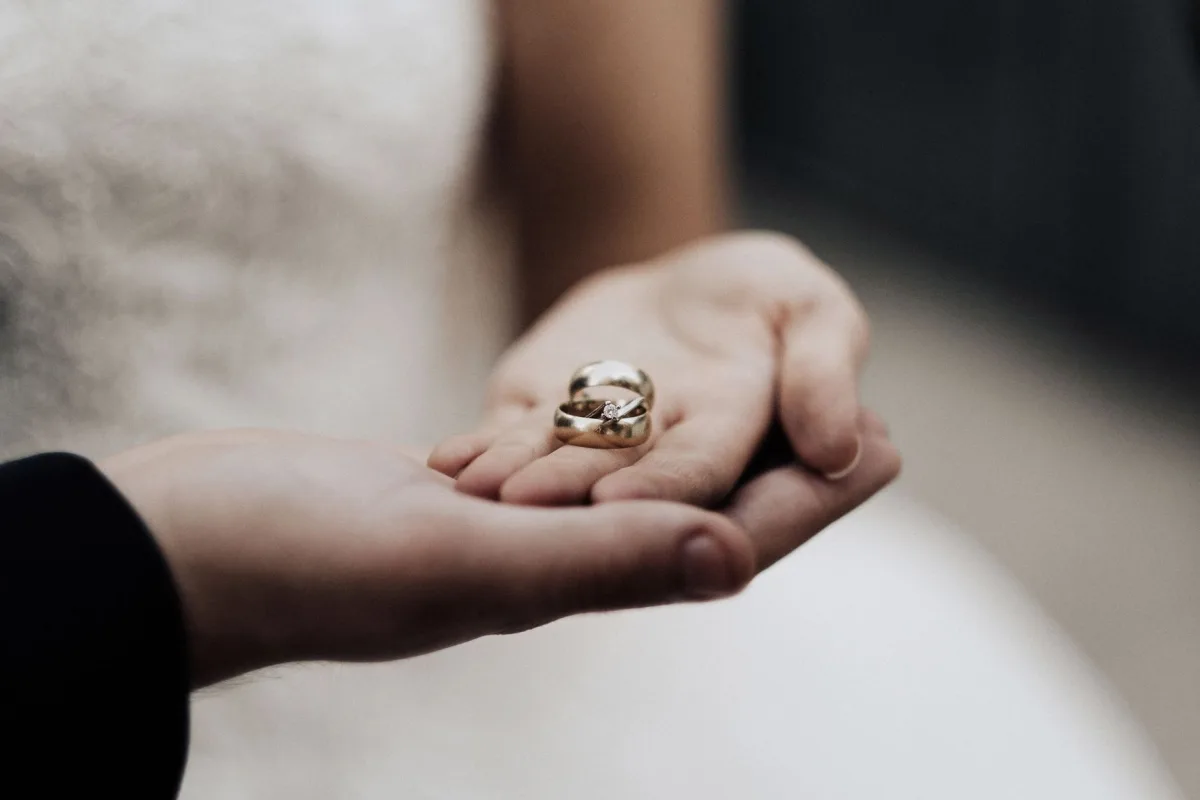
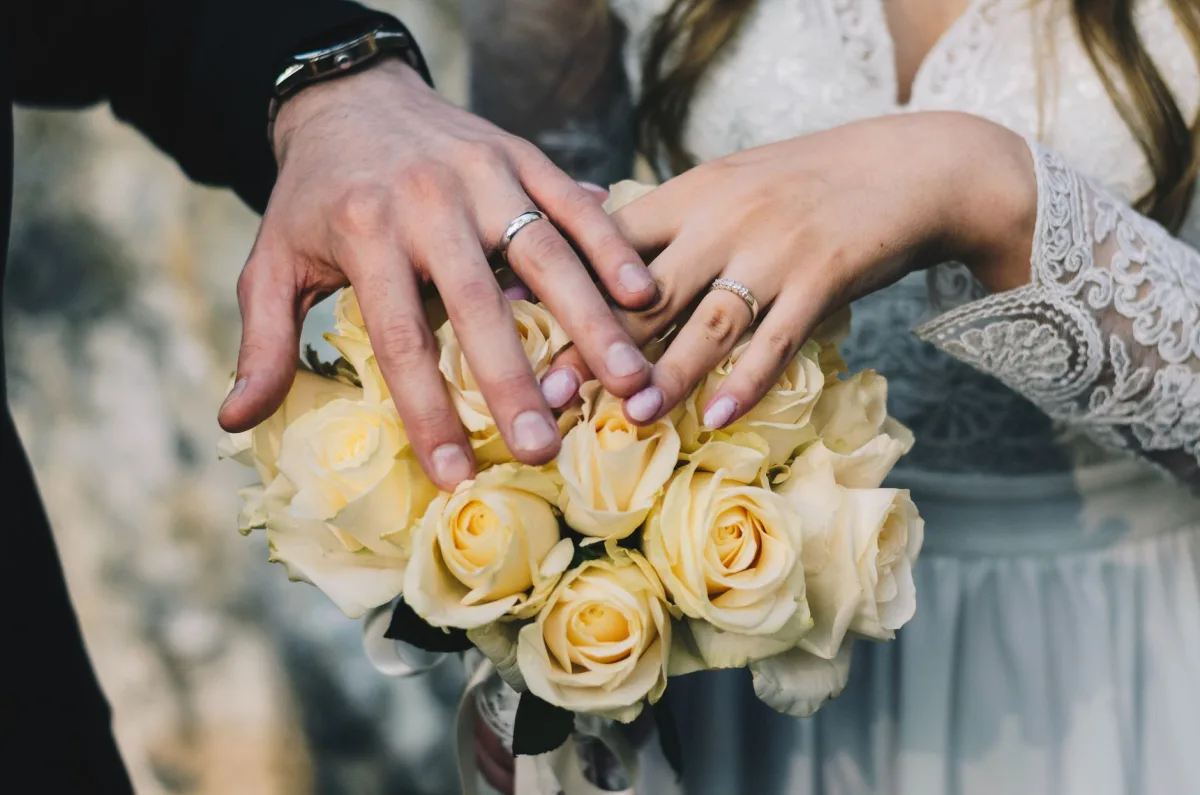
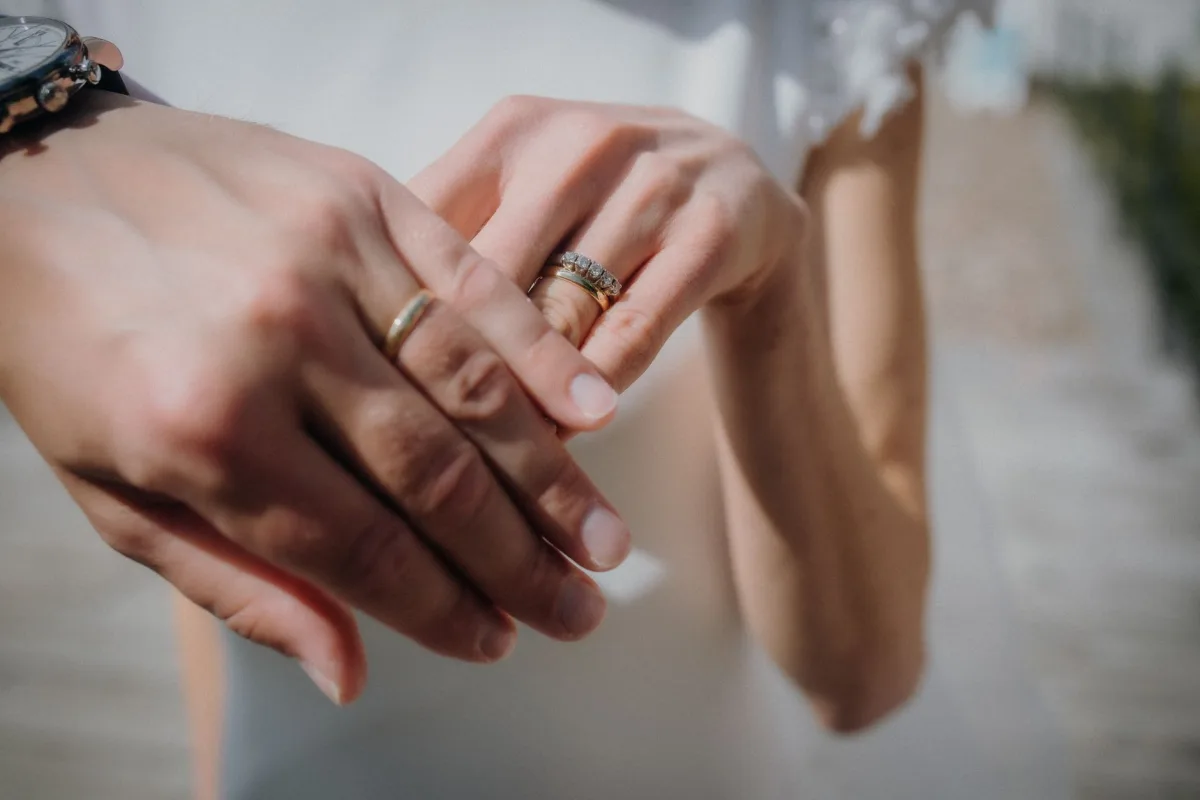
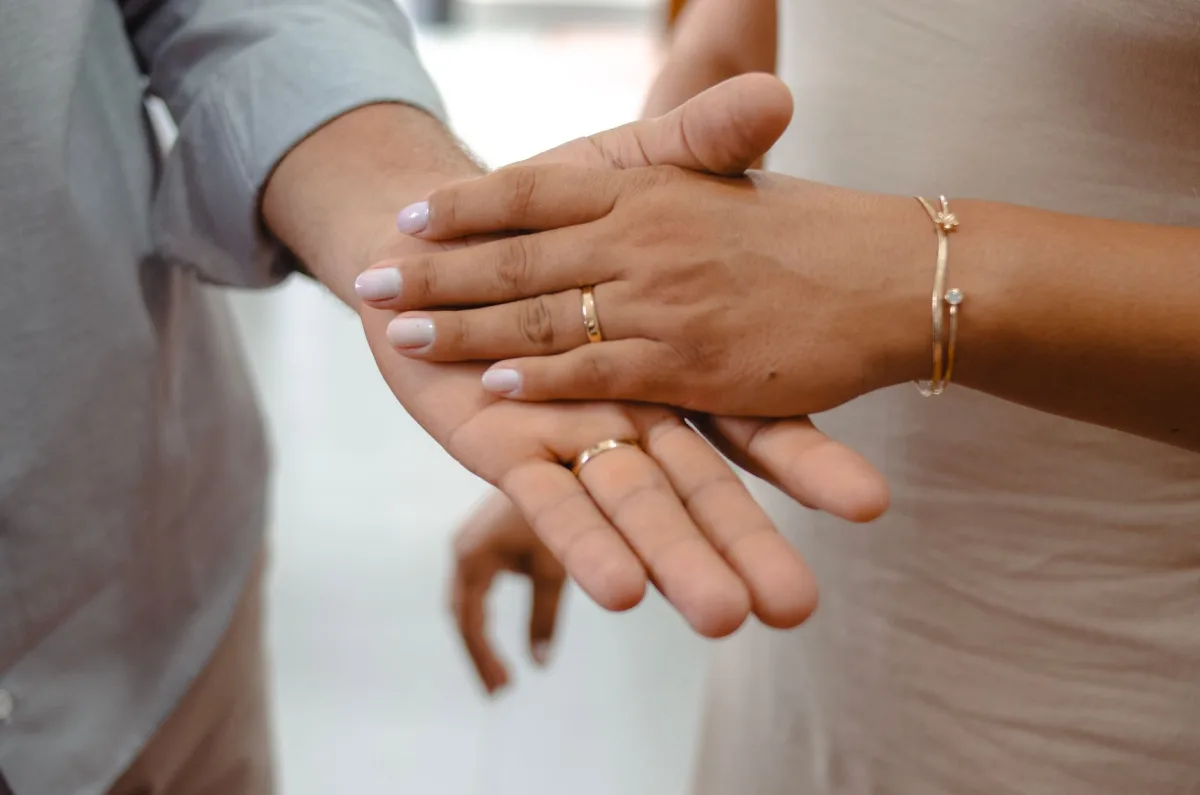
The wedding rings a chain like Kay sells sit in the familiar mainstream categories: plain and diamond-set bands, bridal sets that pair an engagement ring with a matching band, and men's bands in various metals. The metals are the standard ones you would expect anywhere, gold in several colours and karats, and harder contemporary metals for men's bands. Judging any of these rings comes down to the same fundamentals you would apply at any retailer.
The metal and its purity
Gold is graded in karats; the colour is an alloy choice. Confirm the exact karat and metal in writing, because it drives both durability and price.
Stone quality
For a diamond, the four Cs, cut, colour, clarity and carat, decide value far more than the store name does. Ask how each is graded.
Certification
For a significant centre stone, an independent grading report from a recognised laboratory is the document that protects you. Ask whether it is included.
Service terms
Resizing, warranty, inspection schedules and returns are part of the product at a chain. Read the conditions before you buy, not when a stone loosens.
None of this is unique to Kay, and that is the useful insight: a wedding ring is a wedding ring wherever you buy it. The retailer affects the price, the service and the buying experience, but the quality lives in the metal, the stone and the paperwork. If you want to ground yourself in those fundamentals first, our overview of wedding rings covers the metals, shapes and terms that matter at any store.
The real advantages of a big chain
There are genuine reasons couples choose a national jeweller, and it is worth naming them plainly. Availability is the first: you can see rings in person in most cities, and if you move house your warranty and service still work at another branch. Financing is the second: chains typically offer payment plans that spread the cost, which some couples value even though it deserves careful reading. In-house services are the third, resizing, cleaning, inspection and repair handled under one roof rather than shipped away.
For a first-time ring buyer who wants to hold rings, try sizes on the spot and have a physical store to return to, that bundle of convenience has real worth. It is the same appeal that draws people to any established high-street brand: predictability. Just make sure you are choosing the convenience deliberately, and not paying a premium for it without noticing.
What to check before you buy
The honest cautions around any large-chain purchase are not about Kay specifically; they apply to every mall jeweller. The most important is financing. Store payment plans can carry deferred-interest terms, where interest is waived only if the full balance is cleared inside a promotional window, and charged retroactively if it is not. Ask exactly how the plan works, what the interest rate is, and what happens if a payment is late, then decide with eyes open.
The second is the warranty. Extended service plans often require you to bring the ring in for periodic inspections to keep the coverage valid, and missing one can void it. Note the schedule and keep your receipts. The third is the centre stone: for anything beyond a modest diamond, ask for an independent grading report rather than an in-house assessment, so the quality is verified by a third party. Get the metal, karat, stone details and all terms in writing before you leave.
A final piece of perspective on price. Comparing rings across retailers is easiest when you compare the specifications, not the sticker: the same metal, karat and certified stone grade should cost broadly the same wherever you shop, and a large brand's marketing does not change the physics of the ring. If your budget is tight, our guide to affordable wedding rings explains where savings are safe and where they are not.
How Kay fits a couple's ring plan
A chain like Kay tends to suit couples who value convenience, an in-person experience and national after-sales service, and who are buying mainstream styles rather than something bespoke. It suits less well those chasing a highly custom design, an unusual stone, or the absolute lowest price per specification, which independent jewellers and some online sellers can sometimes beat. Neither answer is wrong; it depends on what you weigh most.
If you are buying as a couple, it also helps to decide up front whether you want a matched pair. Our guide to his and hers wedding rings covers how to shop for two coordinated bands, and our look at men's wedding bands covers the widths and metals that hold up on a working hand. Whichever retailer you choose, the ring is the easy part; finding the person to wear it beside is what services like Matrimony360 are built for.
The bottom line
Kay Jewelers is a large, long-established American chain whose real selling points are convenience, availability and in-store service backed by a big parent company. Those are worth something, especially for a first ring purchase. But the quality of any wedding ring lives in its metal, its stone and its paperwork, not in the brand above the door. Shop Kay, or any chain, by checking the karat, the certified stone grade, the financing terms and the warranty conditions in writing, and you will make a confident choice rather than an impulsive one.
Frequently asked questions
Is Kay Jewelers a reputable place to buy wedding rings?
Kay is a long-established national chain founded in 1916 and part of Signet Jewelers, the largest specialty jewellery retailer in the United States, so it offers wide availability and consistent after-sales service. As with any retailer, a confident purchase comes from checking the metal, the certified stone grade and the written terms rather than relying on the brand name alone.
What should I check before buying a ring on a store payment plan?
Read the financing terms closely. Store plans can use deferred interest, where interest is waived only if the full balance is paid inside a promotional window and charged retroactively if it is not. Ask for the interest rate, the promotional period, the consequence of a late payment, and get it in writing before you commit.
Do wedding rings from a chain come with certification?
For a significant diamond centre stone, ask specifically for an independent grading report from a recognised laboratory rather than an in-house assessment. Plain bands do not need certification, but any notable stone should come with third-party paperwork documenting its cut, colour, clarity and carat, so request it before you buy.
Can I resize a wedding ring bought from a mall jeweller?
Gold and platinum rings can usually be resized, and a national chain's advantage is that you can often have this done in store or at another branch. Harder contemporary metals used in some men's bands generally cannot be resized, so confirm the metal and the resizing policy before purchase if size might change later.
Is a big-brand jeweller more expensive than an independent one?
Not necessarily, but you should compare on specifications rather than the logo. The same metal, karat and certified stone grade should cost broadly the same across retailers, so price any two rings by their documented details. A large brand's marketing does not change the underlying value of the ring itself.