Vintage Wedding Rings: The Complete Guide
Antique versus vintage versus estate, the Victorian, Edwardian and Art Deco eras, old diamond cuts, and how to buy and care for a ring with history.
A vintage wedding ring carries something a brand-new one cannot: a history. The craftsmanship of an earlier era, a design that has already outlived fashions, and often a smaller footprint on the world than freshly mined and manufactured jewellery. But the vintage market is also full of loose language, where "vintage", "antique", "estate" and "vintage-inspired" get used interchangeably even though they mean quite different things. This guide sorts out the terms, walks through the great design eras and their signatures, explains the older diamond cuts that give these rings their character, and covers how to buy and care for a ring that has already lived a life.
The short version
- The words are not interchangeable: antique means roughly a century old, vintage is younger, estate just means previously owned.
- Each era has a signature: Victorian romance, Edwardian lace, Art Deco geometry, mid-century simplicity.
- Older diamond cuts glow differently, made for candlelight rather than the sharp sparkle of modern cuts.
- Buy on provenance and condition, and have any genuine antique checked by a specialist before you commit.
Vintage, antique, estate and vintage-inspired
The single most useful thing to learn first is what these words actually mean, because they change both the character and the price of a ring.
Antique
Broadly, a piece around a century old or more. An antique ring is a genuine survivor of its era, prized for age and rarity.
Vintage
Younger than antique, typically a few decades old, old enough to belong to a distinct period but not yet a century in age.
Estate
Simply a previously owned ring of any age. An estate ring may be antique, vintage or nearly new; the word only means second-hand.
Vintage-inspired
A brand-new ring made in an older style. It offers the look of a period piece with modern materials, a known stone origin and no wear.
The distinction matters for expectations. A true antique carries genuine age, history and often irreplaceable hand craftsmanship, but also the wear and fragility of a century of life. A vintage-inspired ring gives you the aesthetic with the reliability of new manufacture. Neither is better; they answer different desires. If your interest is more in a one-of-a-kind look than in age specifically, our guide to unique wedding rings covers modern routes to individuality, and the pillar on wedding rings sets the wider context.
The great eras and their signatures
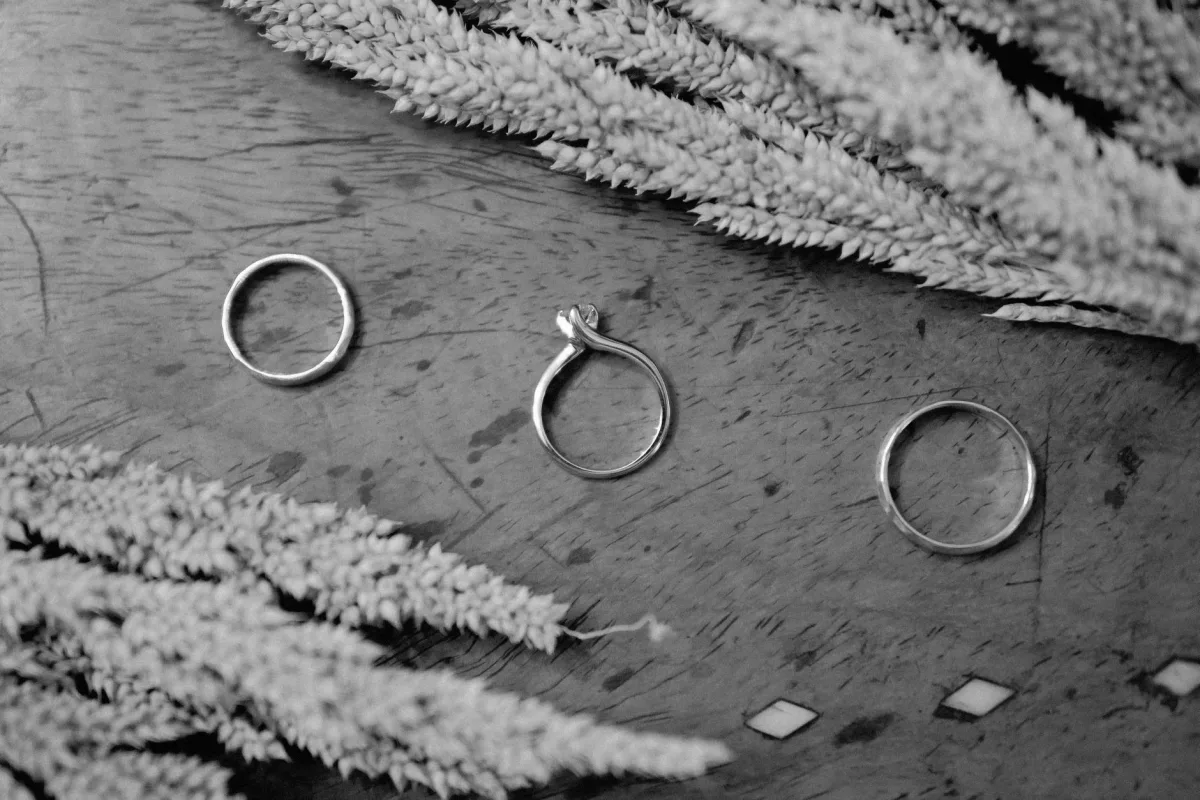
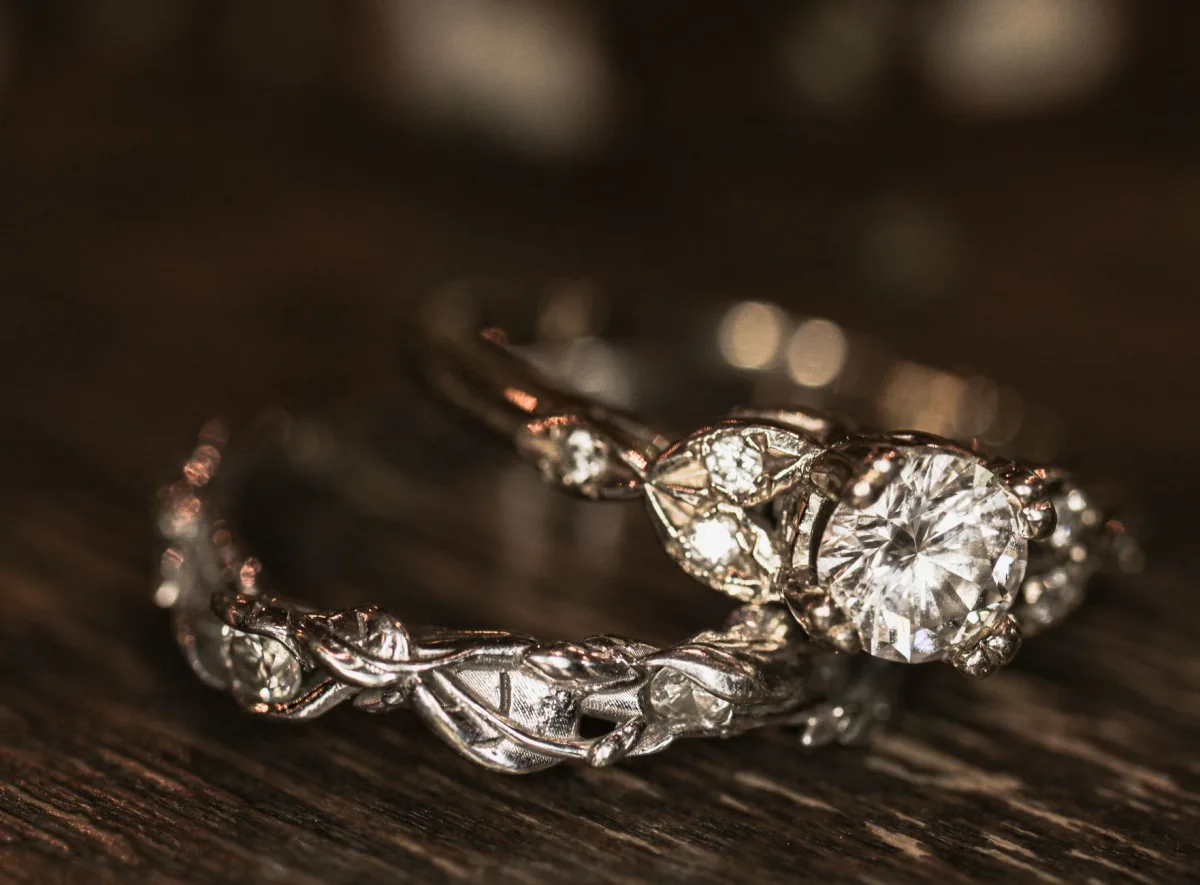
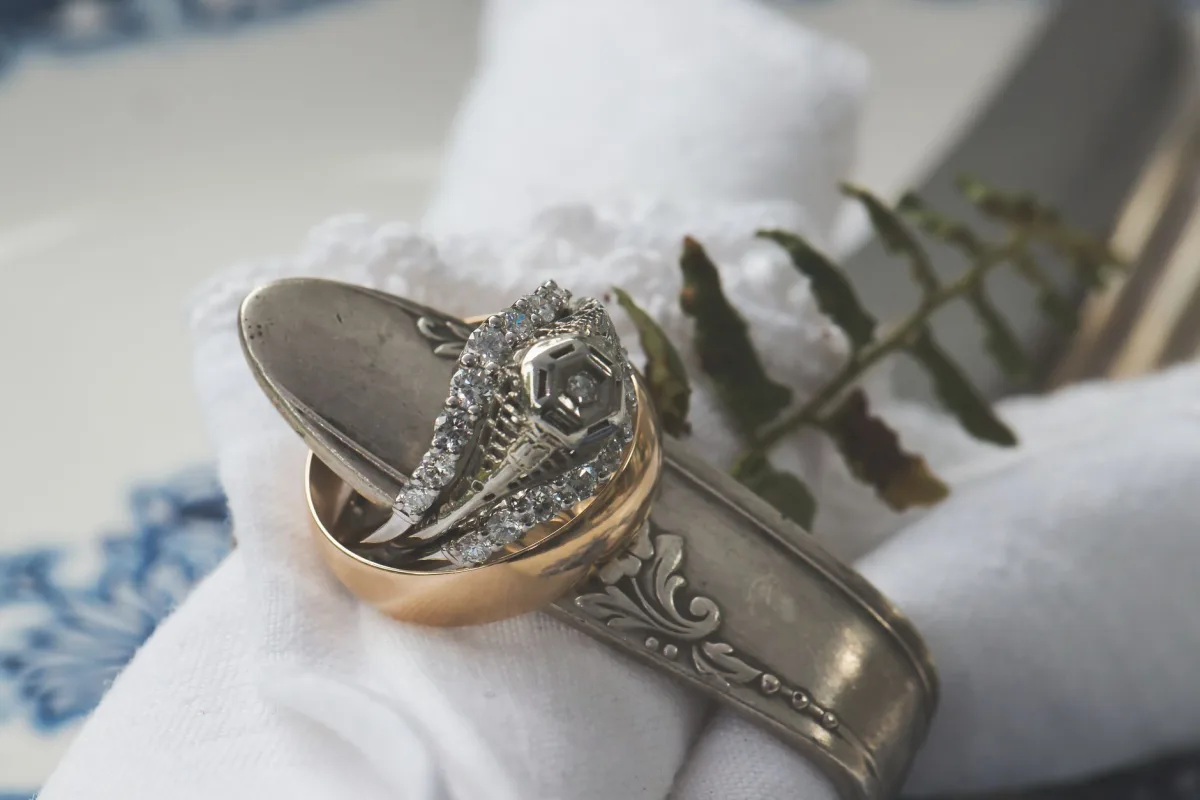
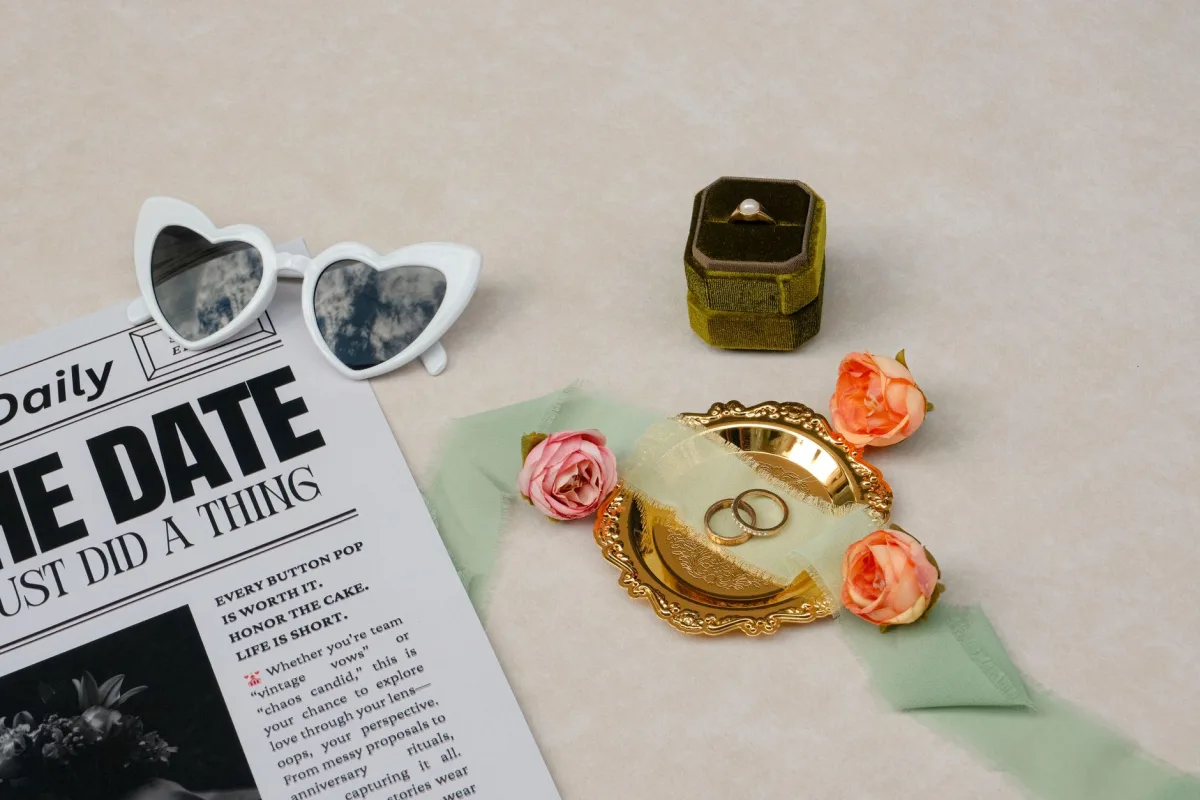
Most vintage and antique rings can be placed in a design period, and learning the signatures lets you read a ring at a glance and choose the era whose spirit suits you.
Victorian rings, from the long reign of Queen Victoria, tend toward romantic, nature- inspired motifs: hearts, flowers, serpents and stars, often in yellow gold, sometimes with coloured stones and seed pearls. The Victorian era was long, so its jewellery spans sentimental early pieces to grander later ones.
Edwardian rings, from the early twentieth century, are all about delicacy: fine, lace-like platinum filigree, milgrain beading and an airy, light look, frequently pairing diamonds with pearls or sapphires. The Edwardian era prized elegance and refinement above all.
Art Deco rings, from the 1920s and 1930s, are the most recognisable of all: bold geometry, strong symmetry, contrasting colour and crisp lines. The Art Deco style swapped Edwardian softness for architectural confidence, and its rings remain among the most sought after on the vintage market. Later Retro and mid-century pieces move toward bolder yellow and rose gold and simpler, cleaner forms.
The older diamond cuts
Part of what gives an antique ring its distinctive glow is the stone itself, because diamonds were cut differently before modern machinery. These older cuts were shaped by hand to shine under candlelight and lamplight, not under the bright showroom lighting modern cuts are optimised for, so they have a softer, warmer, more romantic play of light rather than the sharp, icy flash of a contemporary brilliant.
Old mine cut
A squarish cushion shape with a high crown and large facets. Chunky and warm, it gathers and glows rather than flashing.
Old European cut
The round forerunner of the modern brilliant, with a smaller table and larger facets. Soft, candle-lit sparkle with real character.
Rose cut
A flat base rising to a domed crown of triangular facets, with no pointed bottom. Gentle, subtle shine and an unmistakably antique look.
Step and emerald cuts
Rectangular cuts with long parallel facets that flash in broad planes rather than sparkling, a hallmark of Art Deco design.
These cuts are one reason genuine antique rings feel different from vintage-inspired ones: modern makers usually use modern brilliant-cut stones, which sparkle in a way the older cuts do not. If the soft glow of an old cut is what draws you, an authentic period ring or a modern setting fitted with a salvaged old cut stone is the way to get it. Our guide to diamond bands covers how these stones behave in a wedding band specifically.
Why choose vintage
Beyond the look, several genuine reasons draw couples to older rings.
- Craftsmanship. Much antique jewellery was made largely by hand, with filigree and engraving that mass production rarely matches today.
- Individuality. A period ring is unlikely to be seen on anyone else's hand, which is part of its appeal for people who want something distinct.
- Sustainability. Buying an existing ring reuses metal and stones already above ground, avoiding fresh mining and manufacture.
- Value and history. A ring with a story and provenance carries a meaning a new one has to earn over time, and can hold value well.
Set against these are the honest cautions: genuine antiques can be fragile, older settings may need restoration, sizing an intricate antique band is delicate work, and provenance can be hard to verify. All of which points to buying carefully.
Buying a vintage ring wisely
A vintage ring rewards a slower, more careful purchase than a new one, because condition and authenticity vary enormously. A few principles keep you safe.
Buy from a reputable specialist or dealer who can speak to a ring's age, origin and any repairs, and who provides documentation. Ask directly what is original and what has been replaced or restored, since a reset stone or a re-shanked band changes both value and character. Inspect the condition closely: check for worn prongs, thinning on the underside of the band, and hairline cracks in old settings, all of which are common in pieces that have been worn for decades. For anything sold as a genuine antique, have it examined by an independent jeweller or gemmologist before committing, and get any significant stone independently assessed.
Two practical points often surprise buyers. First, resizing an intricate antique, especially an eternity-style band or one with detailed shoulders, can be difficult or risky, so try to buy close to your size. Second, insure a valuable antique on an agreed-value basis, because replacing a one-of-a-kind period ring is not the same as replacing a mass-market one. For how insurance fits the wider picture of wedding jewellery, our guide to wedding jewellery covers care and protection, and matrimony360 is a calm place to weigh a heritage purchase without pressure.
Caring for an older ring
An antique ring has already survived a long time, but it needs gentler handling than a modern one to keep doing so. Take it off for manual work, sport and swimming, since old settings and worn bands are more vulnerable to knocks than robust new ones. Clean it gently with warm soapy water and a soft brush, and avoid ultrasonic cleaners on antique pieces, as vibration can loosen old, hand-cut stones and fragile settings. Have a specialist check the setting periodically, because a century-old prong can give way without warning. Treated with this ordinary care, a vintage ring can carry its history on for another generation, which is much of the point of choosing one.
Frequently asked questions
What is the difference between vintage, antique and estate rings?
Antique generally means a ring around a century old or more, a genuine survivor of its era. Vintage is younger, typically a few decades old, belonging to a distinct period but not yet antique. Estate simply means previously owned and says nothing about age, so an estate ring could be antique, vintage or nearly new. Vintage-inspired, by contrast, is a brand-new ring made to look old.
Are old diamond cuts less sparkly than modern ones?
They sparkle differently rather than less. Old mine, old European and rose cuts were shaped by hand to glow under candlelight, so they have a softer, warmer play of light instead of the sharp, icy flash of a modern brilliant cut optimised for bright showroom lighting. Many people choose antique rings specifically for that gentler, more romantic character, so it is a matter of taste, not quality.
Is a vintage wedding ring a good investment?
A genuine antique with good provenance and craftsmanship can hold or grow in value, especially sought- after styles such as Art Deco, but a ring should be bought first for love, not as an investment. Value depends heavily on authenticity, condition and documentation, all of which can be hard to verify, so buy from a reputable dealer and have significant pieces independently assessed rather than assuming a resale return.
Can a vintage ring be resized and repaired?
Often yes, but with more care than a modern ring. Plain vintage bands resize readily, while intricate antique pieces, detailed shoulders or eternity-style settings can be difficult or risky to alter, so it is wise to buy close to your size. Repairs and restoration are best done by a specialist experienced in antique jewellery, since old metals and hand-cut stones need gentler handling than new ones.
How do I know a vintage ring is authentic?
Buy from a reputable specialist who can document a ring's age, origin and any repairs, and ask directly what is original versus replaced. Hallmarks, design signatures of the claimed era, and the style of the diamond cut all help confirm authenticity. For anything sold as a genuine antique, have it examined by an independent jeweller or gemmologist, and get any significant stone assessed, before you commit.