Unique Wedding Rings: The Complete Guide
Alternative stones, distinctive metals, custom design and hidden details: how to make a wedding ring genuinely yours without regret.
A unique wedding ring is not a gimmick or a dare. It is simply a ring that looks like the two people wearing it rather than like everyone else's. Sometimes that means an unusual stone, sometimes an unexpected metal, sometimes a plain band with a hidden engraving that only the couple will ever read. This guide walks through the honest ways to make a wedding ring your own, what each choice costs you in durability or budget, and how to end up with something distinctive that you will still love in thirty years.
The short version
- Unique means personal, not just flashy. The most memorable rings usually change one or two things, not everything at once.
- Every choice is a trade-off. Softer stones and darker metals look striking but demand more care over a lifetime of daily wear.
- Custom is closer than people think. Many jewellers will build a one-off ring, and it does not always cost more than a branded design.
- Comfort and daily life come first. A ring you take off constantly is not really yours; test the shape against how you actually live.
What makes a wedding ring unique
A wedding ring is a finger ring worn to show that its owner is married, a custom with roots stretching back to antiquity. For most of that history the ring was deliberately plain, because the meaning mattered more than the metal. Uniqueness, then, is a modern luxury: once the plain gold band stopped being the only option, couples gained room to make the ring say something specific about them.
It helps to separate the idea of "unique" from the idea of "expensive." A ring becomes distinctive through any of four levers, and none of them requires a large budget. You can change the stone, change the metal, change the shape or setting, or change the detail work such as engraving and texture. Pull one lever thoughtfully and the ring already stands apart. Pull all four at once and you risk a ring that reads as busy rather than personal. Restraint is what separates a ring that feels timeless from one that feels like a phase.
Unusual stones beyond the diamond
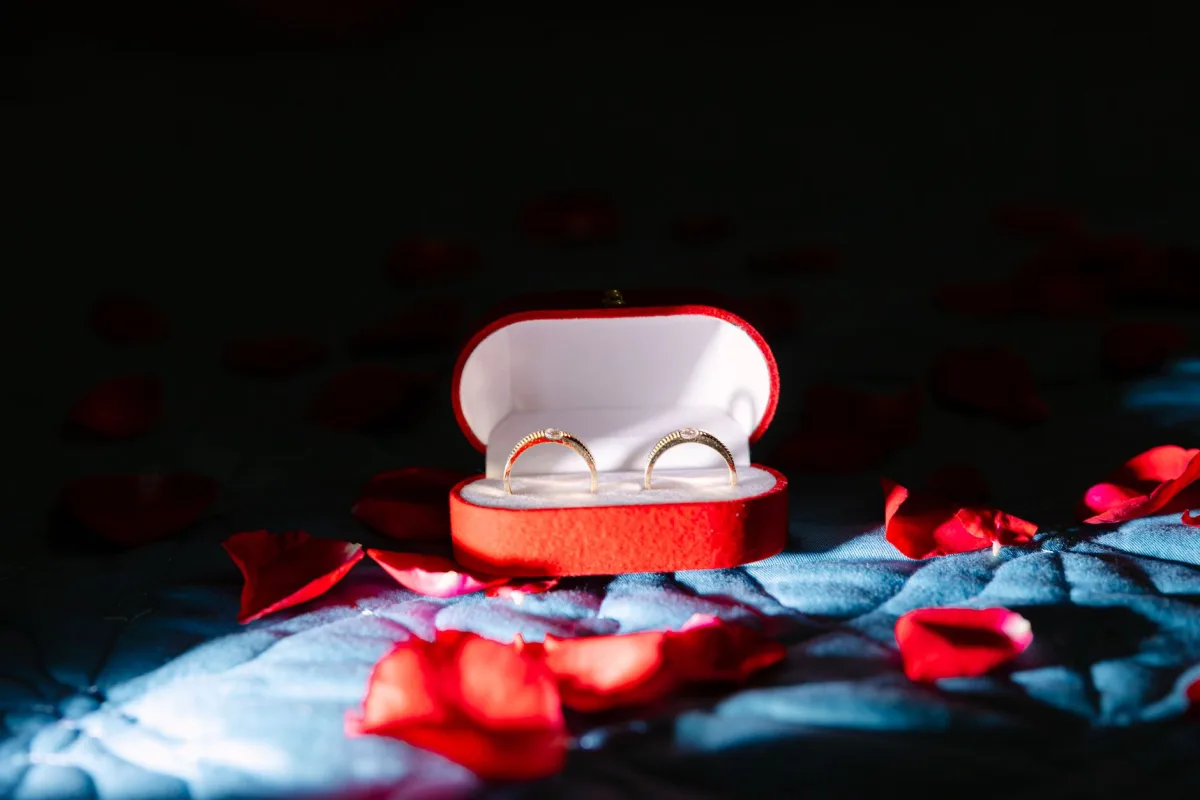
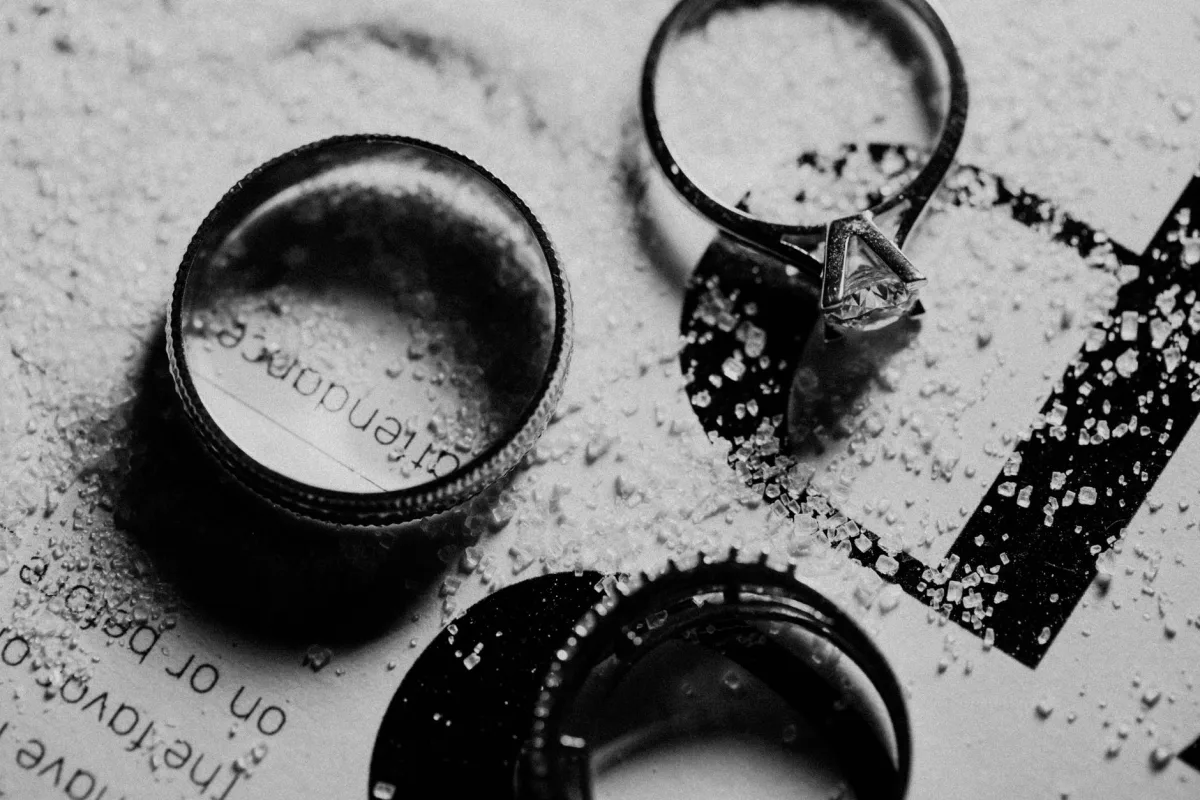
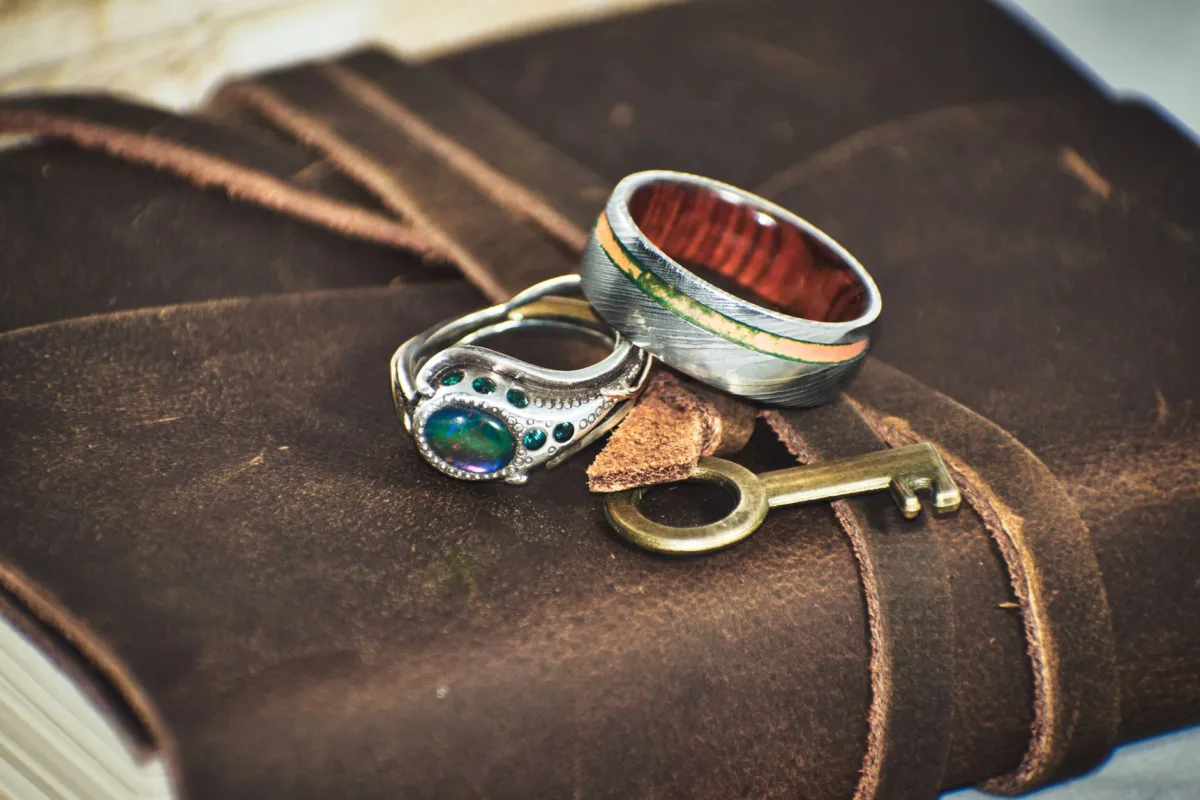
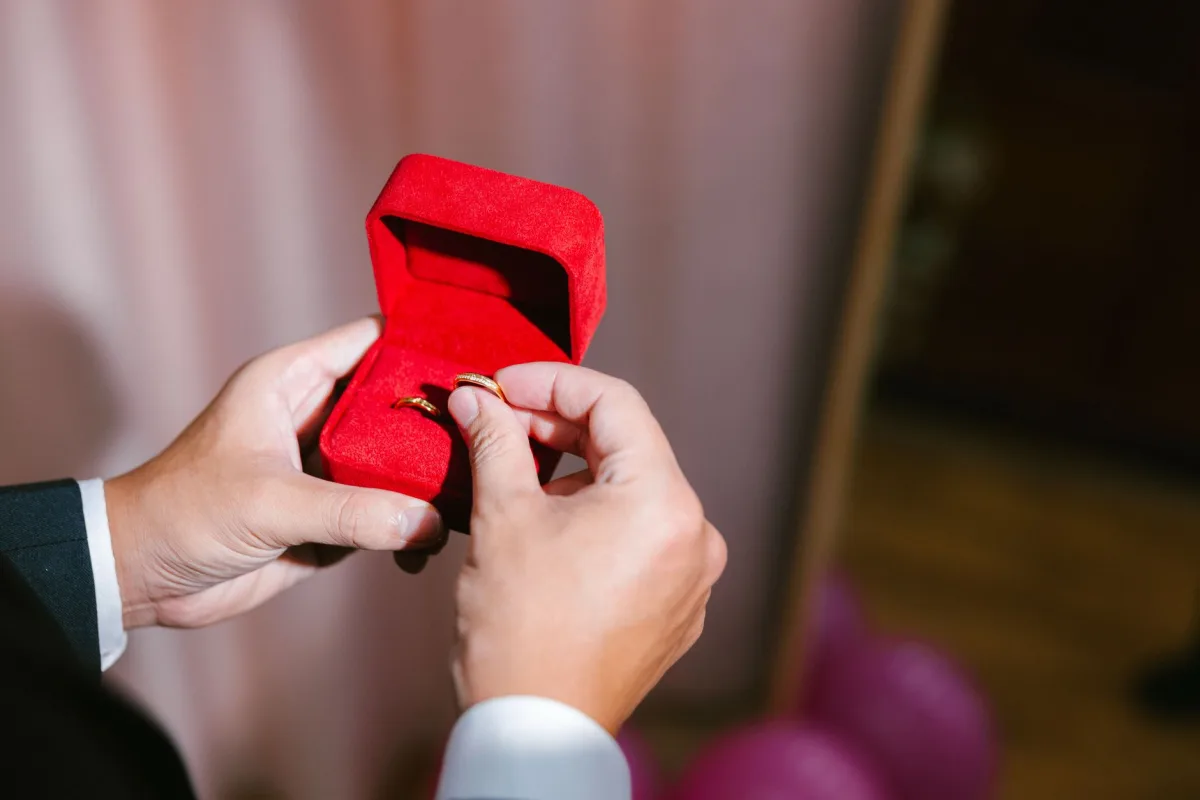
The white diamond is the default, which is exactly why choosing something else reads as a decision. The colour of a gemstone is the fastest route to a ring nobody else in the room is wearing, and coloured stones have a long romantic history of their own.
Sapphire
A corundum gemstone famous in blue but available in nearly every colour except red. Very hard and excellent for daily wear, which is why it is the classic diamond alternative.
Emerald and ruby
Rich green and red respectively. Ruby is as hard as sapphire; emerald is softer and more brittle, so it wants a protective setting and gentler handling.
Moissanite
A near-colourless lab-made silicon carbide with fire and brilliance close to diamond, at a fraction of the price. A genuinely modern choice, not an imitation of something else.
Birthstones
Setting a stone tied to a birth month folds personal meaning into the design. It is one of the oldest ways to make a piece of jewellery specifically yours.
Moissanite deserves a special mention because it confuses people. It is naturally occurring silicon carbide, first identified by the French chemist Henri Moissan in 1904 in fragments from an Arizona meteor crater, and it rates about 9.5 on the Mohs hardness scale, just below diamond at 10. Most moissanite sold today is lab-grown, which is why it is affordable, and it is a stone in its own right rather than a fake diamond. The birthstone tradition, meanwhile, assigns a gem to each calendar month and gives you an instant, meaningful reason to pick a particular colour. If a coloured centre stone appeals to you, our guide to diamond wedding rings for women is worth reading alongside this one so you can compare the two paths directly.
Distinctive metals and finishes
The band itself is a quieter way to stand out, and often a more durable one. Yellow gold is the historical default, but coloured gold alloys have widened the palette enormously. Rose gold gets its warm pink from a higher copper content; white gold is gold alloyed with pale metals and usually plated with rhodium for brightness. Choosing a less common metal colour is one of the simplest ways to make a ring feel current without touching the stone at all.
- Rose gold. Warm, soft and increasingly popular, it flatters a wide range of skin tones and pairs beautifully with vintage-inspired designs.
- Mixed metals. A two-tone band, say rose and white gold, is distinctive by design and lets a couple echo each other's rings without matching exactly.
- Matte and hammered finishes. A brushed, satin or hand-hammered surface reads as understated and modern, and hides everyday scratches far better than a high polish.
- Contemporary metals. Titanium and tungsten offer dark, industrial tones and serious scratch resistance, though they generally cannot be resized the way precious metals can.
If a warmer or darker band is what draws your eye, it is worth reading our overview of wedding bands to see how metal choice interacts with width, profile and long-term maintenance before you commit.
Custom and made-to-order rings
The most reliably unique ring is one that did not exist until you asked for it. Custom work has a reputation for being out of reach, but many independent jewellers build one-off rings as routine business, and the price is often comparable to a mid-range branded design once you remove the marketing markup. The process usually moves from a conversation about your ideas, to a sketch or a digital render, to a wax or resin model you can try, and finally to the finished piece.
Going custom does ask more of you. You need a clear reference for what you like, a realistic budget shared with the jeweller up front, and patience, because bespoke work takes weeks and cannot be rushed in the final fortnight before a wedding. The reward is a ring with a story attached to its making, and the freedom to combine elements, an heirloom stone in a modern setting, for example, that no catalogue would ever offer. For couples who want their two rings to feel like a deliberate pair rather than a coincidence, our guide to wedding ring sets covers how to coordinate design across both bands.
Personal details that carry meaning
Some of the most unique rings look ordinary from across a room and reveal themselves only up close. This is the territory of engraving and hidden detail, and it is where budget matters least of all. A date, a name, a short phrase, coordinates of a meaningful place or even a fingerprint can be engraved inside the band where only the wearer knows it is there. Because the detail is private, it never dates the way an unusual outward style might.
Other quiet touches include a small accent stone set on the inside of the band against the skin, a thread of a second metal running through the design, or a subtle pattern borrowed from a family heirloom. These choices reward the person who wears the ring every day rather than the people who glance at it, which is arguably the point of a wedding ring in the first place. If you like the idea of an older piece reworked into something new, our guide to vintage wedding rings explains how heirloom and antique rings can be a source of ready-made character.
Choosing unique without regret
The risk with a distinctive ring is that "unusual" and "impractical" sometimes travel together. A striking soft gemstone, a delicate open setting or a dramatic raised stone can all snag, chip or wear faster than you expect over decades of daily life. The way to avoid regret is to weigh every unique choice against how you actually use your hands. A nurse, a gardener and a pianist do not want the same ring, however much they admire it.
A few practical filters help. Ask about the hardness of any coloured stone and whether the setting protects it. Ask whether the metal can be resized later, because fingers change over a lifetime. Ask how a matte finish is maintained and whether a dark contemporary metal can be repaired at all. And picture the ring not on your wedding day but on an ordinary Tuesday five years from now. If it still feels right in that light, it is genuinely yours. Matrimony360's fashion guides exist to help you ask these questions before you buy, not after, so that distinctive never has to mean disappointing. For the broader context of styles, settings and sizing, our main overview of wedding rings is the natural next read.
Frequently asked questions
Do unique wedding rings cost more than traditional ones?
Not necessarily. Uniqueness comes from choices like coloured stones, unusual metals or custom detailing, and several of those are cheaper than a large white diamond, not dearer. A moissanite centre stone or a rose gold band can produce a distinctive ring for less than a conventional design. Custom work does add a labour cost, but with an independent jeweller it is often comparable to a branded piece once you strip out the marketing premium.
Are gemstones other than diamond durable enough for daily wear?
It depends on the stone. Sapphire and ruby are very hard and hold up well to everyday wear, which is why sapphire is the classic diamond alternative. Moissanite is nearly as hard as diamond. Emerald, opal and pearl are softer or more brittle and are better suited to a protective setting and gentler handling. Always ask the jeweller about a stone's hardness and how the setting shields it before you choose it for a ring you will never take off.
Can I design a wedding ring completely from scratch?
Yes. Many independent jewellers offer a full bespoke service, moving from your ideas to a sketch, then a digital render, then a model you can try, and finally the finished ring. It typically takes several weeks, so start early rather than in the final month before the wedding. Bring clear references and a realistic budget, and you can end up with a piece that no catalogue could offer, including designs built around an inherited stone.
What is the most personal way to make a plain band unique?
Engraving. A hidden date, name, short phrase, set of coordinates or even a fingerprint on the inside of the band turns an ordinary ring into something only you can read. Because the detail is private and invisible from the outside, it never looks dated and never clashes with anything, which makes it the lowest-risk way to add deep personal meaning to an otherwise simple ring.
Will an unusual ring look dated in twenty years?
Bold outward styles carry more of that risk than quiet ones. The rings that age best tend to change one or two elements, an unexpected metal or a meaningful stone, rather than chasing every trend at once. Classic shapes with a personal twist, and private details like engraving, stay timeless because their appeal does not depend on fashion. If longevity matters to you, favour restraint and durability over drama.