White Wedding Gowns: The Complete Guide
The history, the shades from pure white to champagne, how fabric changes the look, and how to choose and preserve the white that flatters you.
The white wedding gown feels timeless, yet it is younger and more deliberate than most people assume, and "white" turns out to be not one colour but a whole family of shades. Choosing well means understanding where the tradition came from, which shade of white flatters your skin, how fabric changes the way white reads in photographs, and how to keep the gown pristine before and after the day. This guide covers the white gown in full, so you can pick the one that looks radiant on you rather than simply the one on the mannequin.
The short version
- The white gown is a Victorian invention, popularised after Queen Victoria married in white in 1840.
- "White" is a spectrum. Pure white, diamond white, ivory and champagne each flatter different skin tones.
- Fabric changes everything. The same shade reads differently in silk, satin, tulle or crepe.
- Choose the shade against your skin, not against the shop lighting, and in daylight if you can.
Where the white wedding gown came from
White is so bound up with weddings that it feels ancient, but the convention is roughly two centuries old. As the reference on the white wedding records, the fashion took hold after Queen Victoria wore a white gown to marry Prince Albert in 1840, and the image spread through the press until white became the aspirational choice. Before that, brides across Europe simply wore their best dress in any colour, and a white gown had signalled wealth, since a garment that showed every mark was a luxury only the well-off could risk.
It is worth holding this history lightly. White later gathered associations of purity and formality, but as the wider history of the wedding dress shows, it is a Western convention rather than a universal one, and across much of Asia white is the colour of mourning while red leads instead. Choosing a white gown is a beautiful tradition, but it is a choice, and understanding that frees you to wear the shade that suits you rather than a rigid ideal.
The shades of white
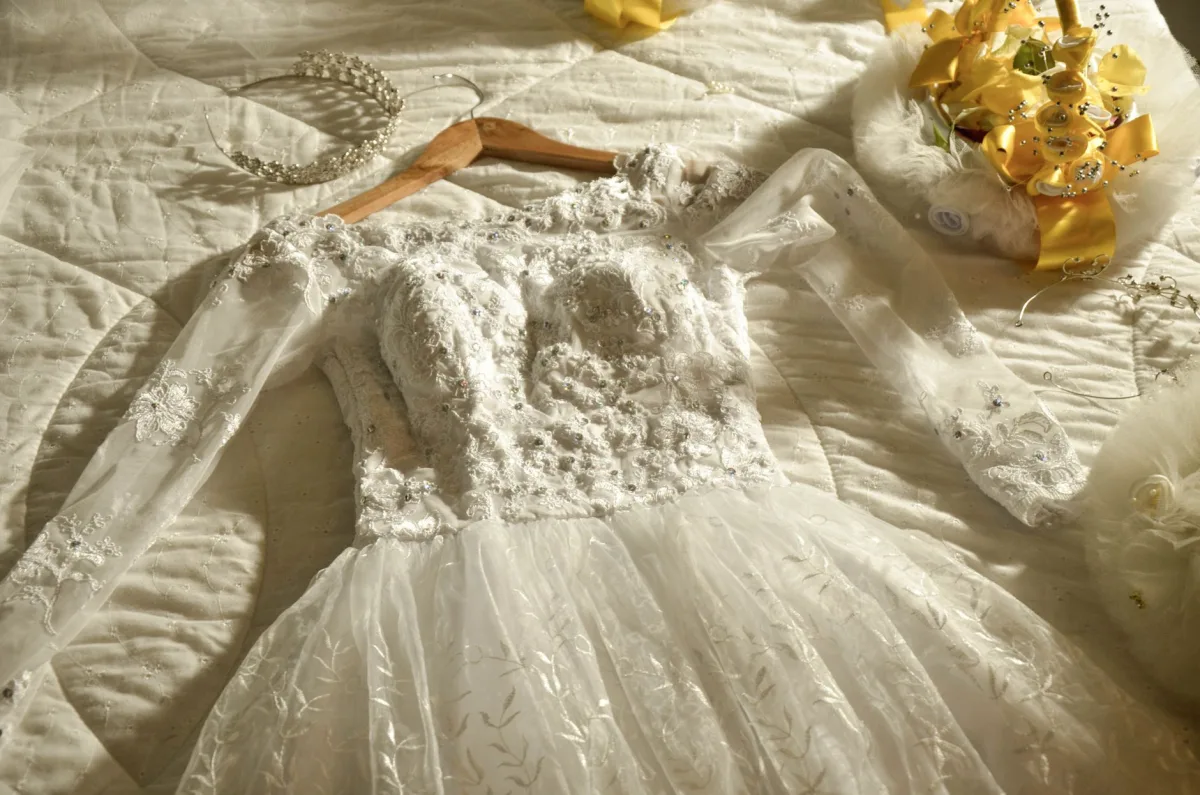
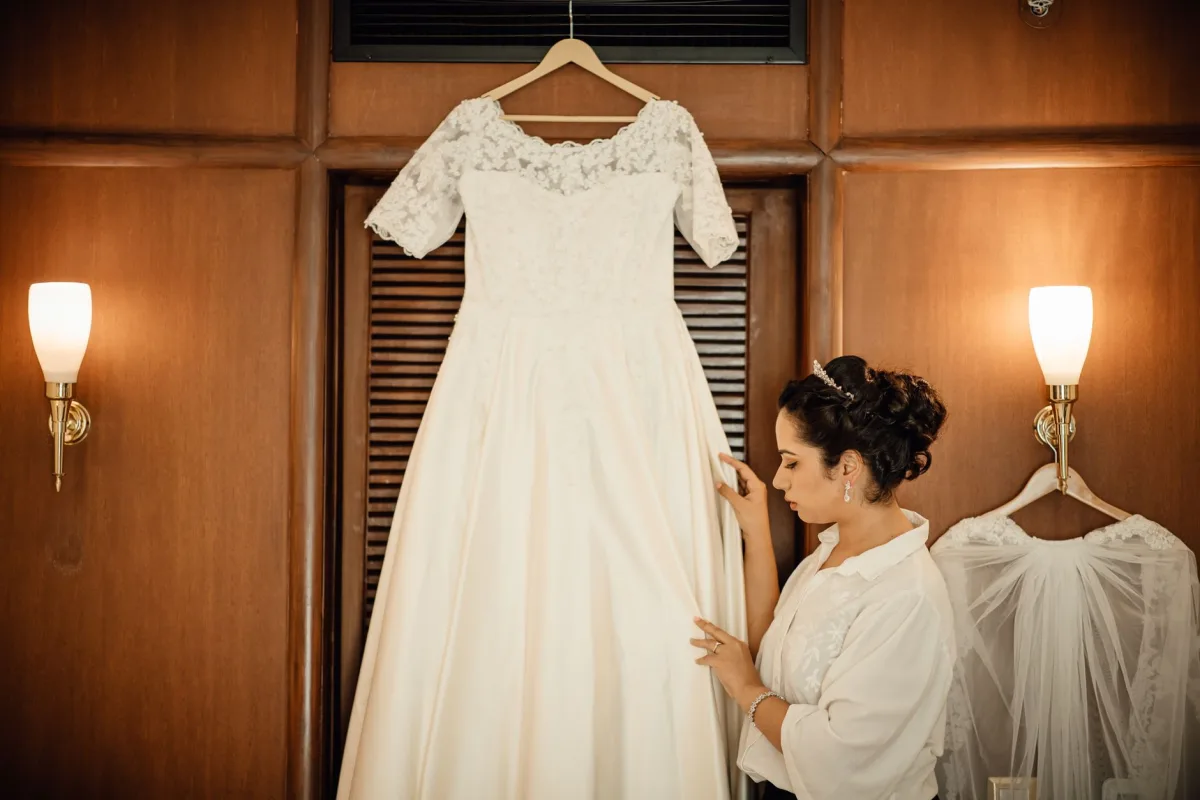


Walk into a bridal boutique and you quickly learn that "white" is a range, not a single colour. The difference between the shades is subtle on the rail and dramatic against skin, which is why trying them on matters so much. These are the four you will meet most often.
Pure or stark white
The brightest, coolest white, with a faint blue edge. Striking and modern, it flatters deeper and cooler skin tones and can overwhelm very fair skin.
Diamond or natural white
A soft, slightly warmer white without the blue cast. The most versatile shade, flattering across a wide range of complexions.
Ivory
A warm white with a gentle cream tone. Kind to fair and medium skin, it reads romantic and classic and photographs softly.
Champagne or blush-white
The warmest option, tinged with gold or pink. Flattering and forgiving on very fair skin, and increasingly popular for its subtle colour.
None of these is more "correct" than another; they simply suit different people. The common mistake is assuming pure white is the default and the goal. For many brides a diamond white or ivory is far more flattering, lending warmth to the face where stark white can drain it.
Choosing a shade for your skin tone
The single most useful principle is contrast: a white that is very different in tone from your skin can look harsh, while one that harmonises tends to flatter. As a gentle guide, cooler and deeper skin tones often carry pure white beautifully, while fair skin usually glows more in a warmer ivory or champagne that stops the gown and the complexion blurring into one pale wash. Warm undertones lean toward ivory and champagne; cooler undertones can carry a brighter white.
Two practical rules make the choice reliable. First, judge the shade against your bare skin, ideally your face and shoulders, not against the shop wall or the next gown on the rail. Second, look in daylight if you possibly can, because bridal boutiques are often lit to make every gown read as brilliant white, hiding the very differences you are trying to see. Take a photograph in natural light, since the camera will keep the day and it sees colour differently from the eye.
How fabric changes the white
The same shade of white looks different in different fabrics, because each one reflects light in its own way. A high-shine satin bounces light and can read brighter and cooler, while a matte crepe absorbs it and looks softer. Layered tulle diffuses colour into something airy, and lace adds texture that catches shadow. This is why a shade you loved in one gown can look subtly wrong in another: the fabric, not just the dye, is doing the talking.
Silhouette interacts with all of this too. A grand ball gown in stiff satin makes a very different statement from a fluid crepe column, even in the identical shade of white. When you find a shade you love, look at it in the fabric and shape you actually want, not in a sample swatch. For the full range of silhouettes and how to choose among them, our guide to choosing a wedding gown walks through every shape in detail.
Caring for and preserving a white gown
White is unforgiving of marks, which is the same reason it once signalled status, so a white gown asks for a little care before and after the day. Before the wedding, keep it covered in a breathable garment bag, hang it away from direct sun that can yellow the fabric, and handle it with clean hands. On the day, a small emergency kit with a stain pen, safety pins and a soft cloth handles the inevitable smudge of makeup or a splash at dinner.
Afterwards, if you want to keep the gown, have it professionally cleaned as soon as possible, because unseen stains such as champagne or sweat can oxidise and yellow over time if left. Specialist gown preservation, which cleans and then boxes the dress in acid-free materials, is worth it for an heirloom piece. Store it flat and cool, away from damp and light. Treated this way, a white gown can stay bright enough to pass down. To see how the gown sits within the whole bridal look and timeline, our overview of bridal attire and preparation puts it all in sequence.
Is a white gown right for you?
White is a beautiful default, but it is only a default. Many modern brides choose a warm champagne, a soft blush, or step away from white entirely toward a colour that means more to them, and brides from traditions that avoid white for the ceremony may wear it only for a second outfit. There is no rule that a wedding gown must be white, and the tradition is recent enough that departing from it breaks nothing.
The most useful way to decide is to ask what you want the gown to do: honour a long convention, flatter your colouring, reflect your culture, or simply make you feel most yourself. Any of those is a good reason, and a white gown chosen in the right shade for the right person is genuinely radiant. If you would like the wider view first, our broad guide to wedding gowns covers every colour and style, and the guide to the wedding gown for the bride looks at the day-of experience of wearing it.
Frequently asked questions
Why do brides wear white?
The white wedding gown became fashionable after Queen Victoria wore white to marry Prince Albert in 1840, and the image spread through the press until it became the aspirational choice. Before then, brides wore their best dress in any colour, and white had signalled wealth because it showed every mark. White later gathered associations of purity and formality, but it is a Western convention rather than a universal rule.
What is the difference between white and ivory wedding gowns?
Pure white is the brightest, coolest shade with a faint blue edge, while ivory is a warm white with a gentle cream tone. Between them sit diamond or natural white, a soft white without the blue cast. Ivory tends to flatter fair and medium skin, pure white suits cooler and deeper tones, and diamond white is the most versatile. The differences are subtle on the rail but noticeable against skin.
Which shade of white suits my skin tone?
As a guide, cooler and deeper skin tones often carry pure white beautifully, while fair skin usually glows more in a warmer ivory or champagne that keeps the face from washing out. Warm undertones lean toward ivory and champagne, cooler undertones toward brighter white. Always judge the shade against your bare skin in natural daylight rather than under the boutique's lighting, and photograph it to check.
Does a wedding gown have to be white?
Not at all. The white gown is a Western tradition only about two centuries old, so departing from it breaks no real rule. Many brides choose champagne, blush or a colour that means more to them, and in many Asian traditions white is avoided for the ceremony in favour of red. Choose the colour that flatters you and reflects your culture and taste rather than defaulting to white.
How do I keep my white gown from yellowing?
Before the day, keep it in a breathable garment bag away from direct sunlight and handle it with clean hands. After the wedding, have it professionally cleaned promptly, because unseen stains such as champagne or sweat can oxidise and yellow over time. For an heirloom gown, specialist preservation that cleans and boxes it in acid-free materials, then stores it flat, cool and away from light and damp, is the safest choice.