Wedding Gowns: The Complete Guide
Silhouettes, necklines, fabrics, trains, fittings and budget, all in one clear guide to choosing the gown you feel most yourself in.
A wedding gown is the one garment most people will only ever buy once, which is exactly why it can feel so daunting to choose. The vocabulary alone is intimidating: silhouettes, necklines, trains, fabrics that all sound like other fabrics. This guide takes the mystery out of it. It explains what a wedding gown actually is, walks through the shapes and details you will be asked to choose between, demystifies the fabrics, and covers the unglamorous but decisive parts: how shopping and fittings really work, how to budget without regret, and how to keep the gown after the day is done. Read it in order for the full picture, or jump to the section you need.
The short version
- Silhouette is the first real decision. It shapes everything else and should suit your body, not a trend.
- White is a young convention, not an ancient rule, and colour is entirely yours to choose.
- Start early. Ordered gowns often take six to nine months to arrive and fit.
- Fittings make the gown. Even a perfect off-the-rack dress needs tailoring to look right.
What counts as a wedding gown
A wedding dress or wedding gown is the outfit worn by a bride during a marriage ceremony, and while the words are often used interchangeably, "gown" tends to imply the more formal, floor-length, structured end of the spectrum. What that outfit looks like has always depended on culture, era, faith and budget far more than on any single fashion. The elaborate white gown that many people picture is a Western style, and even there it is younger than it feels.
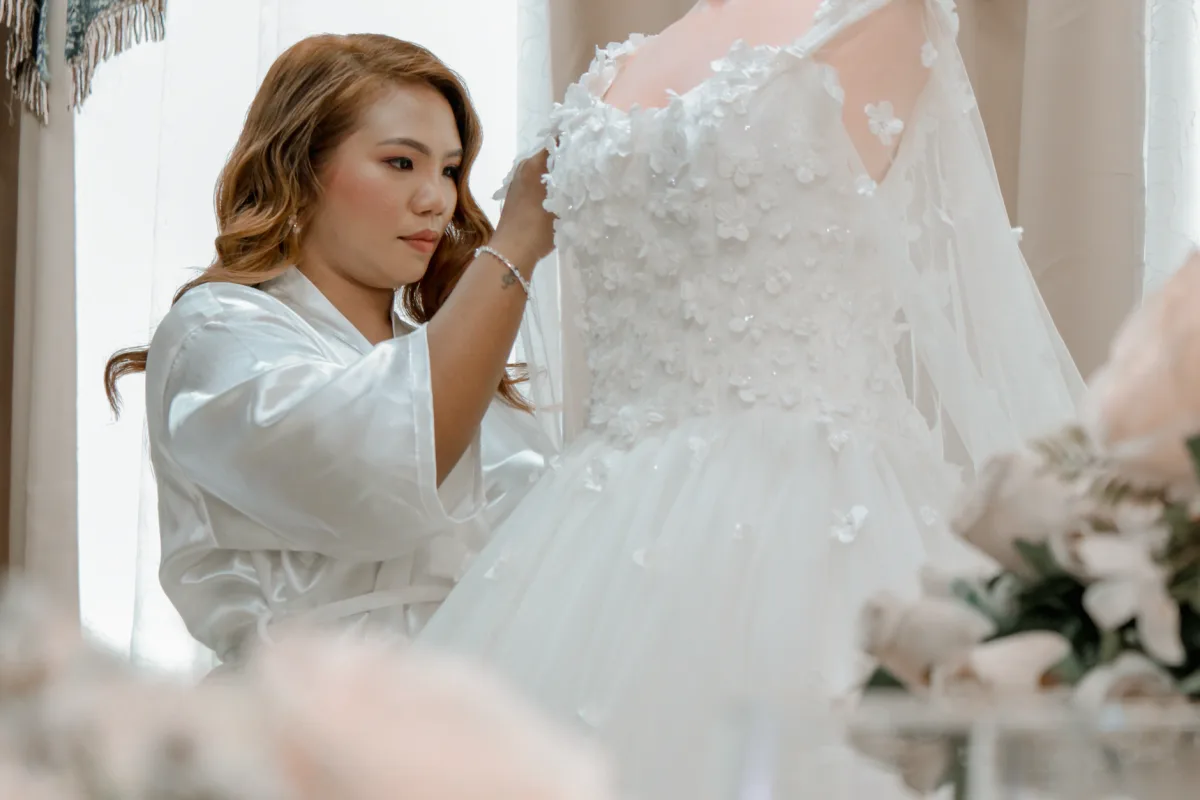
Before you fall for a picture, it helps to know the anatomy of a gown, because almost every design is a combination of the same handful of decisions: the silhouette that gives it shape, the neckline that frames the face, the sleeve or strap treatment, the train that trails behind, and the fabric that carries it all. Get those five in view and the endless racks stop being overwhelming and start being a set of choices you can actually make. Our broader guide to the whole world of bridal places the gown inside the larger picture of beauty, party and timeline if you want the wider frame first.
Why white, and why it is optional
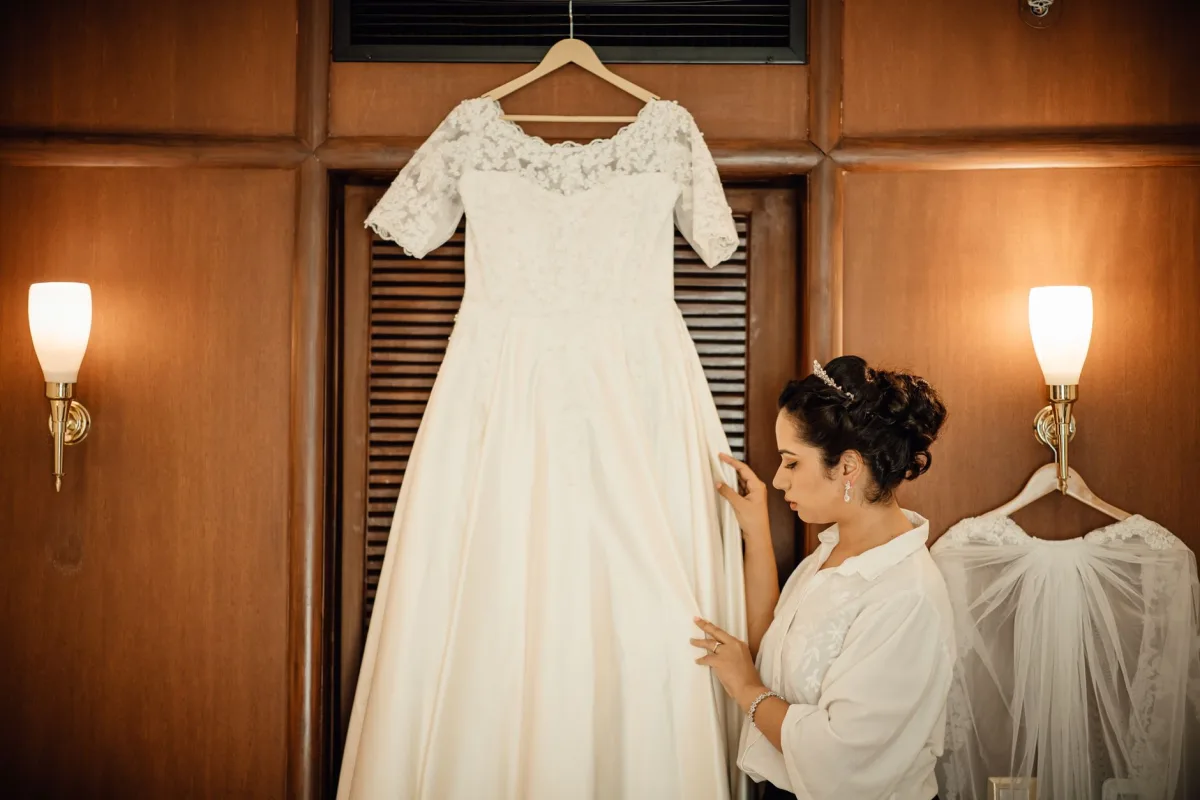
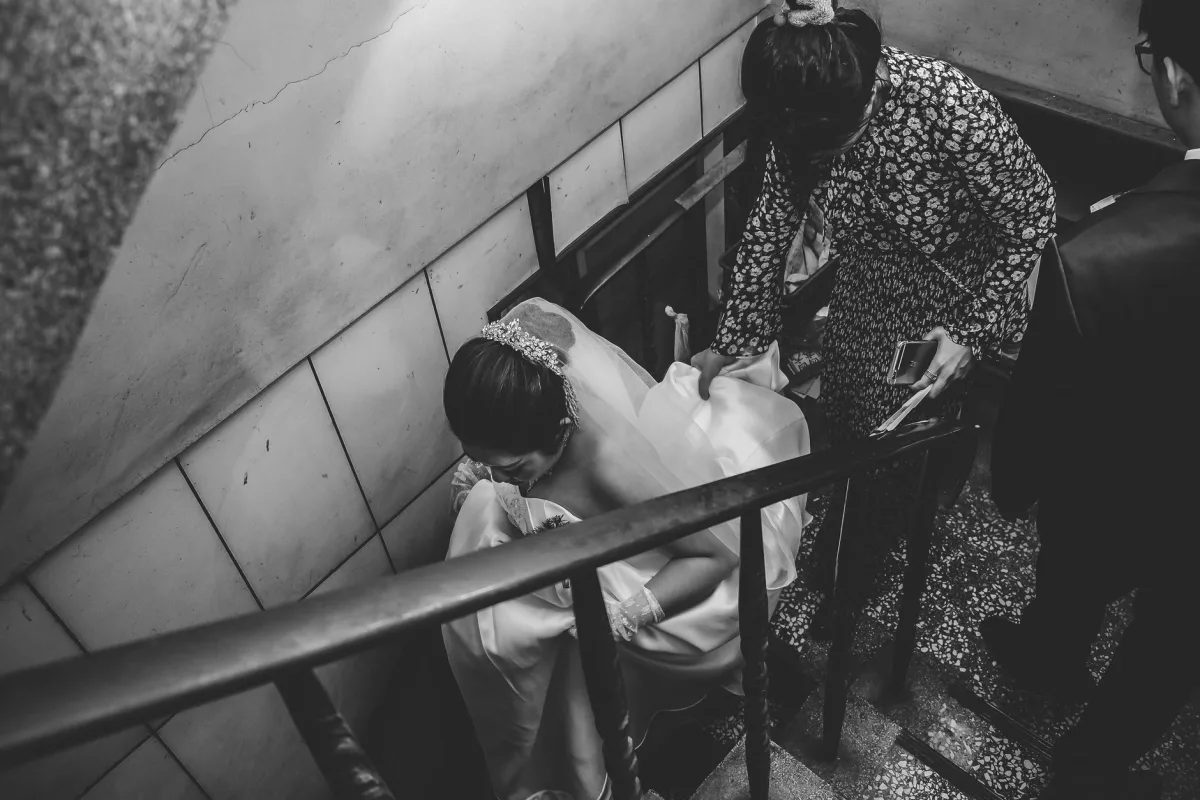
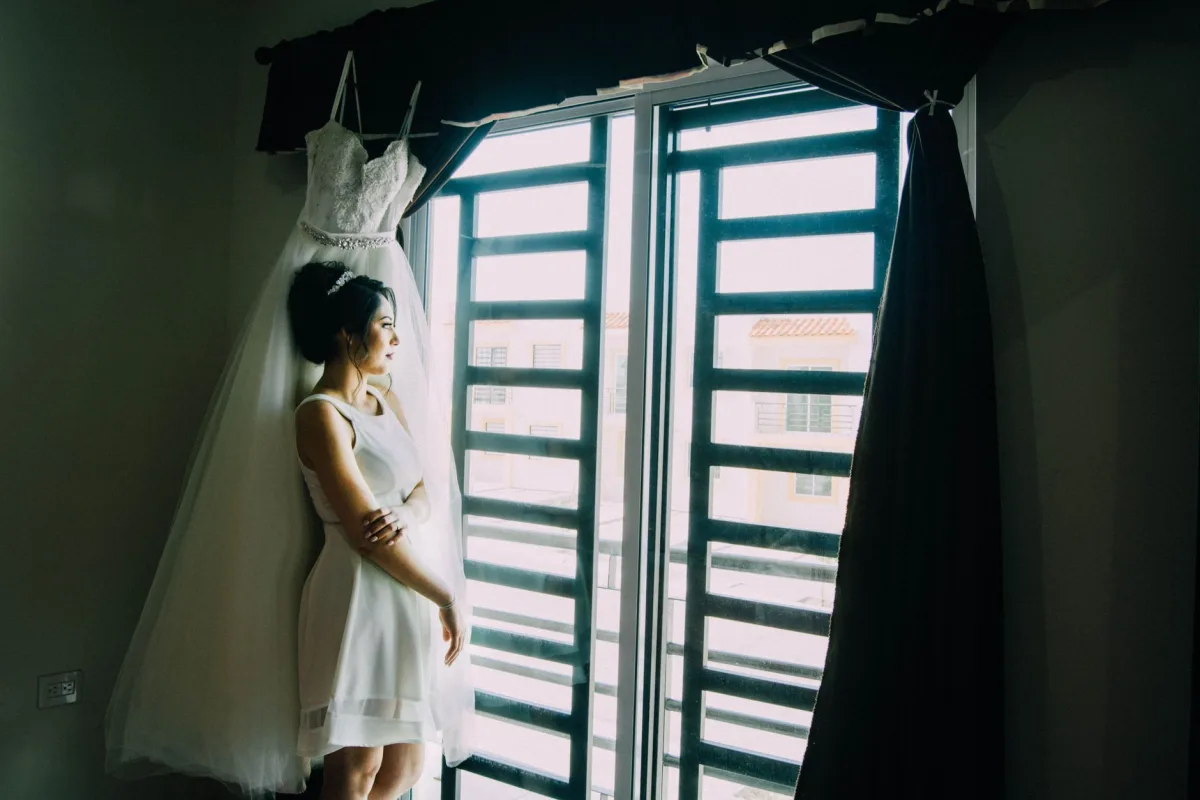
The white wedding tradition is often traced to Queen Victoria, who married in a white lace-trimmed gown in 1840, an image that travelled through the press and slowly hardened into a rule. Before that, brides across Europe simply wore their best dress in whatever colour they owned, and white was chosen partly because it was a conspicuous display of wealth: a pristine pale gown was hard to keep clean and easy to ruin, so wearing one signalled that you could afford to. The association with purity came later and was layered on top.
Step outside the Western frame and the palette inverts. Across much of Asia white is the colour of mourning and is avoided at weddings, so red, gold and richly saturated colours lead instead, read as auspicious and full of life. None of this makes any colour more or less "correct." Modern Western brides increasingly choose blush, champagne, ivory, sage or even bold jewel tones, and a coloured gown is a valid, growing choice rather than a rebellion. If your heart is set on a classic pale gown, our dedicated guide to white wedding gowns goes deeper on the shades of white and how to choose between them.
Silhouettes: the shape of the gown
Silhouette is the single most important word in the shop, because it decides the overall shape and therefore what every other detail is working with. There are a handful of classic silhouettes, and each flatters differently, so the smart move is to try several before you decide you already know which one is "yours."
A-line
Fitted through the bodice, flaring gently to the hem like the letter A. The most universally flattering shape and a safe, elegant starting point.
Ball gown
A fitted bodice with a full, dramatic skirt. The classic fairytale shape, striking in photos but heavy and space-hungry to move in.
Mermaid and trumpet
Fitted through the body and flaring below the knee. Sculptural and glamorous, but restrictive to walk and sit in.
Sheath and column
A straight, narrow line that skims the body. Light, modern and travel-friendly; excellent for beach and civil weddings.
Empire
A raised waistline just under the bust with a flowing skirt. Comfortable, forgiving and softly romantic.
Tea-length and short
Hemmed anywhere from the calf to the knee. Playful and practical, and a natural fit for register-office and relaxed weddings.
A useful rule while you try them: judge the silhouette by how you feel moving in it, not only by how it looks standing still. You will sit, dance, hug people and climb into a car in this gown. A shape that looks spectacular in the mirror but pins your knees together is a shape you will quietly resent by the evening.
Necklines, sleeves and backs
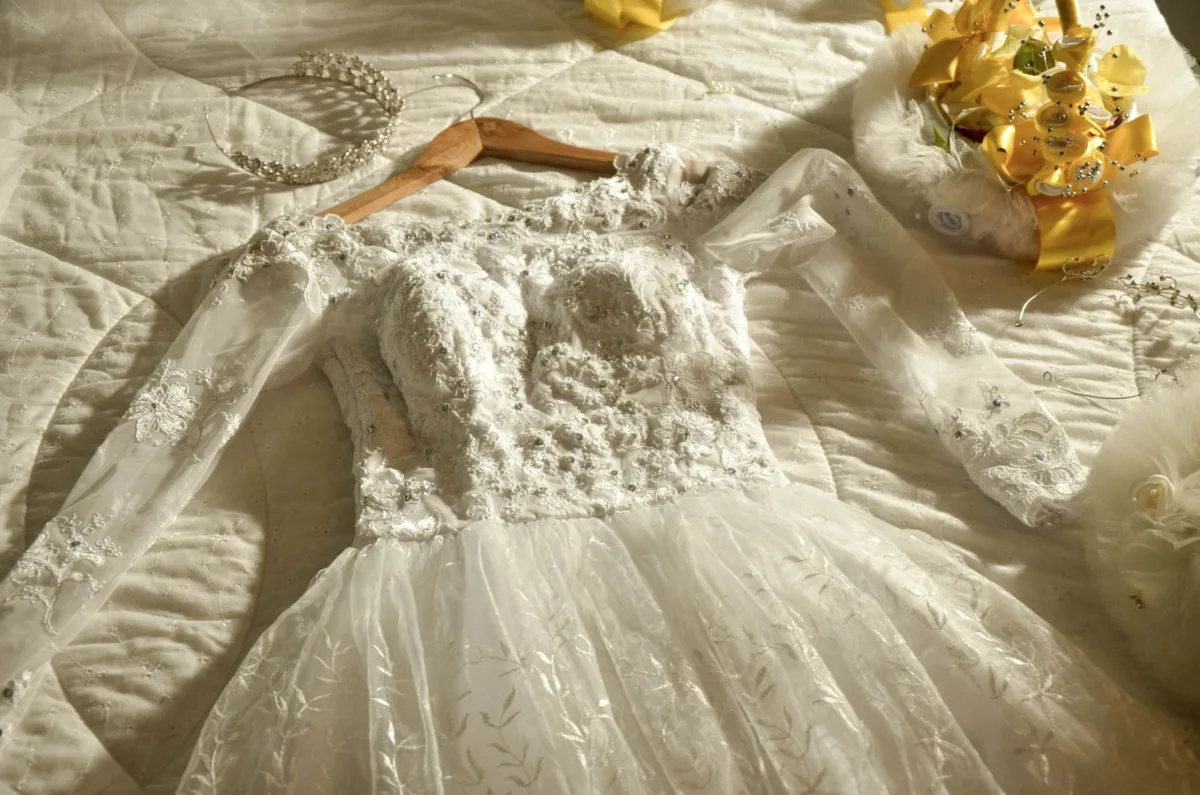
If the silhouette is the shape, the neckline is the frame around your face, and it does more work in photographs than almost anything else. Sweetheart, straight strapless, V-neck, bateau, halter and high necks each change the mood and draw the eye differently. Sleeves and straps have swung firmly back into fashion, from delicate spaghetti straps to long lace sleeves and dramatic off-the-shoulder treatments, and they are a practical friend in cold weather or a place of worship with coverage expectations. The back of the gown deserves as much thought as the front, because it is what most guests see for most of the ceremony: a low back, a row of covered buttons or a keyhole can be the detail people remember.
Fabrics, decoded
Fabric is where the shop language gets thickest, but the ideas underneath are simple. Some fabrics hold structure, some flow, and some add surface texture or shine. Many classic gowns use silk in one of its forms, though modern gowns increasingly use synthetics that mimic it at a fraction of the price. Here is the shorthand you actually need.
Satin and mikado
Smooth, heavy and lustrous. Holds structured shapes beautifully; ideal for ball gowns and sculptural silhouettes.
Chiffon and organza
Light, sheer and floaty. Perfect for soft, layered skirts and warm-weather weddings where you want movement.
Lace and tulle
Lace adds intricate pattern and romance; tulle is the fine net that gives volume without weight. Often layered together.
Crepe
A matte fabric with a subtle texture that drapes close to the body. The go-to for sleek, modern sheath gowns.
Fabric is also a weather decision. A heavy satin ball gown is glorious in a winter hall and punishing on a summer beach, while airy chiffon that floats in July can feel flimsy in a December church. Match the fabric to the venue and season before you fall for the pattern.
Trains and veils
The train is the extended fabric that trails behind the gown, and it comes in graded lengths, from a barely-there sweep to a dramatic cathedral train several feet long. The longer and grander the train, the more it demands of the day: someone to help you manage it, a bustle sewn in so you can dance, and a venue with the space and surface to carry it. A sweep or chapel train is the practical middle ground for most weddings; a cathedral train is a photograph you pay for in logistics. The veil is its own decision and does not have to match the train at all. Length, from a short birdcage or elbow veil to a floor-sweeping cathedral veil, changes the mood far more than the price does.
How gown shopping and fittings actually work
The part that surprises most first-time buyers is the timeline. A made-to-order gown is not bought off a rack and taken home; it is ordered in your size range and can take several months to be produced, then several more weeks of alterations to fit. Starting eight to twelve months before the wedding is comfortable; leaving it to the final months narrows your options to what is available immediately or forces rush fees. If a long lead time is impossible, off-the-rack and sample-sale gowns exist for exactly that reason.
- Book appointments, and bring few people. A calm shop visit with one or two trusted opinions beats a crowd of loud ones. Wear nude, seamless underwear and bring shoes near your wedding heel height.
- Set the budget before you try anything on. Tell the consultant your ceiling and ask them to stay within it, so you never fall for a gown you cannot have.
- Expect alterations, always. Even a well-fitting sample almost always needs taking in, hemming and a bustle. Budget for tailoring on top of the gown price, and allow two or three fittings.
- Photograph every gown on you. The mirror flatters; the camera keeps the day. A phone photo in the shop tells you more than the mirror does about how a gown reads in pictures.
Where to shop matters too. Dedicated bridal boutiques, department-store bridal floors, sample sales and reputable online sellers all serve different budgets and timelines. Our local guide to choosing a bridal shop walks through how to tell a good boutique from a pushy one.
Budgeting and preserving the gown
Wedding gowns span an enormous range, from a few hundred for an off-the-rack or pre-loved dress to several thousand for a designer made-to-order piece, with alterations typically adding a further meaningful sum on top. None of those numbers is the "right" one. A modest gown that fits you beautifully will always photograph better than an expensive one that does not, and the resale and rental markets have shed most of their old stigma, both to save money and to waste less. Treat the figure as a share of your overall budget, decided by you, not a target set by a magazine.
After the day, a gown you want to keep needs proper care. Professional cleaning soon after the wedding removes invisible stains, champagne and skin oils among them, that will otherwise oxidise and yellow the fabric over years. Have it boxed by a specialist in acid-free materials and stored flat, out of light and damp. If you have no wish to keep it, selling, donating or having it remade into something wearable are all good second lives. To complete the look, our companion guide to wedding jewellery covers what to pair with the neckline you have chosen.
The bottom line
A wedding gown is a stack of simple decisions dressed up as an overwhelming one: pick the silhouette that suits your body, the neckline that frames your face, a fabric that fits your venue and season, and a train you can actually live with for a day. Start early, expect fittings, ignore the colour rules that do not speak to you, and spend only what feels comfortable. Do that, and the gown stops being a source of stress and becomes what it should be: the outfit you feel most like yourself in on one of the biggest days of your life.
Frequently asked questions
How far in advance should I buy my wedding gown?
For a made-to-order gown, eight to twelve months before the wedding is comfortable, because the dress can take several months to be produced and then needs two or three fittings for alterations. If your timeline is shorter, off-the-rack gowns, sample sales and rentals exist specifically for that. Leaving it to the final couple of months usually means rush fees or a much smaller range of choices.
Do wedding gowns have to be white?
Not at all. The white wedding gown is a Western convention popularised by Queen Victoria in 1840, not an ancient or universal rule. Across much of Asia white signals mourning and brides wear red and gold instead, and modern Western brides increasingly choose blush, champagne, ivory or even bold colours. The colour of your gown is entirely your choice; there is no rule you are breaking.
What is the most flattering wedding gown silhouette?
The A-line, fitted through the bodice and flaring gently to the hem, is the most widely flattering because it suits nearly every body shape and hides or highlights as needed. That said, "flattering" is personal: the best test is to try several silhouettes and judge each by how you feel moving in it, not only by how it looks standing still in the mirror.
Why do wedding gowns need alterations?
Because gowns are made in standard size ranges, not to your exact measurements, so even a sample that fits well almost always needs taking in, hemming to your shoe height, and a bustle sewn in so you can dance without the train underfoot. Alterations are what turn a good gown into one that looks made for you, and they are a normal, expected cost on top of the gown price.
How should I store my wedding gown after the wedding?
Have it professionally cleaned soon after the day, because invisible stains like champagne and skin oils will yellow the fabric over time if left. Then have it boxed by a specialist in acid-free tissue and materials, and store it flat, away from light, heat and damp. If you would rather not keep it, selling, donating or having it remade into a wearable piece are all good options.