Wedding Gown for Women: The Complete Guide
Silhouette, neckline, fabric, venue, budget and fittings, taken in the right order, so choosing your wedding gown feels calm rather than overwhelming.
Choosing a wedding gown can feel like standing in front of a thousand doors at once: silhouettes, necklines, fabrics, budgets and timelines all clamouring for a decision. The good news is that the process becomes calm the moment you take the choices in the right order. Pick the silhouette first, let it narrow everything else, and the endless racks resolve into a shortlist. This guide walks through that order step by step, so you can find the gown that flatters your body, suits your day and leaves you feeling completely yourself.
The short version
- Silhouette first. The overall shape is the biggest decision and it narrows every choice that follows.
- Neckline frames the face. It shapes your photographs more than almost any other detail.
- Fabric decides drape and comfort, and how the gown behaves in your season and venue.
- Start early and budget the alterations, because almost no gown fits perfectly off the rack.
Start with the silhouette
Silhouette is the overall shape of the gown, and it is the decision that shapes all the others. As the history of the wedding dress shows, a handful of classic shapes recur across eras and cultures, and choosing the one that genuinely suits your body will do more for how you feel than any amount of beading or lace. Try several before you fall for one from a photograph, because gowns behave very differently on a real body than on a model.
- A-line. Fitted through the bodice and widening gently to the hem. Universally flattering and comfortable, which is why it is the most popular shape.
- Ball gown. A fitted bodice with a full, dramatic skirt. The ball gown makes the grandest statement and suits a formal venue.
- Mermaid or fishtail. Fitted through the body and flaring below the knee. Glamorous and striking, though it limits how freely you can sit and move.
- Sheath or column. A slim, straight line that skims the body. Modern and elegant, ideal for a relaxed or contemporary wedding.
- Empire. A raised waistline just below the bust with a flowing skirt. Comfortable and forgiving, and a classic for warm-weather and less formal days.
A useful way to choose is to think about the line you want to create rather than a body-shape label. An A-line lengthens and flatters almost everyone, a mermaid emphasises curves, and a column reads sleek and modern. The gown that surprises you on the try-on is very often the one you end up loving.
The neckline frames your face
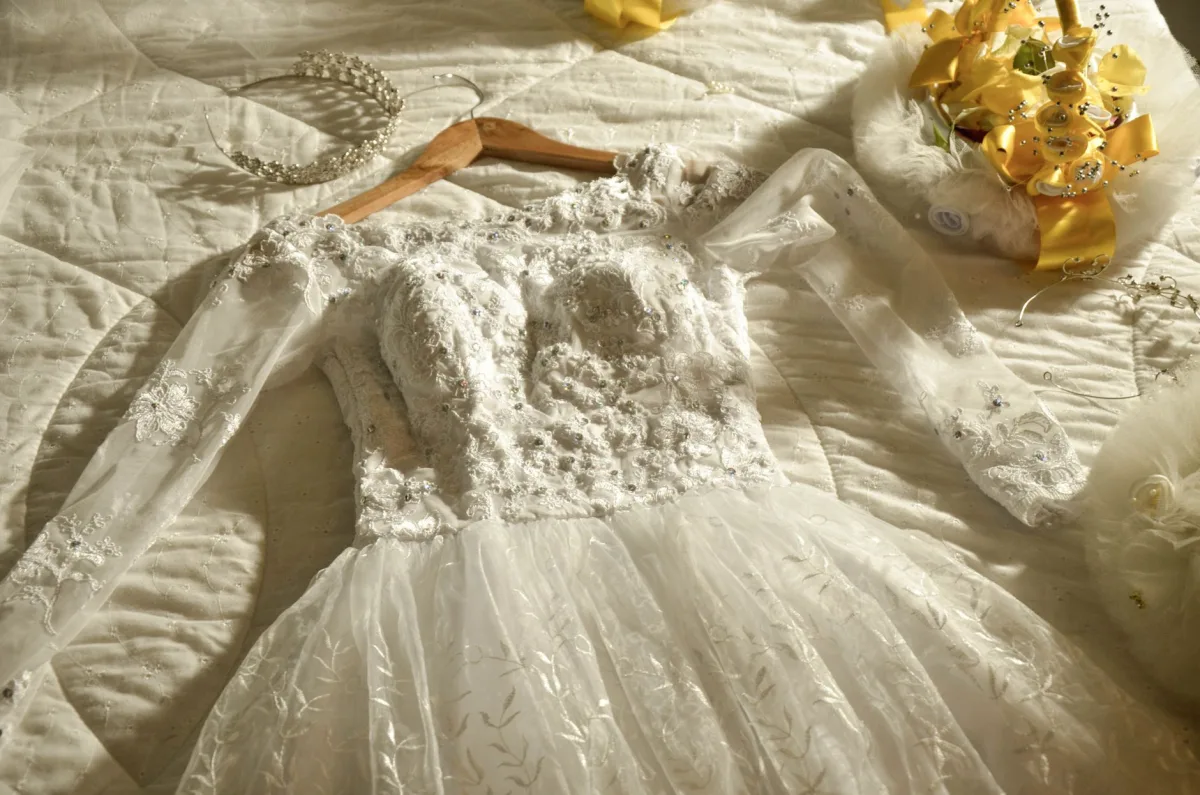
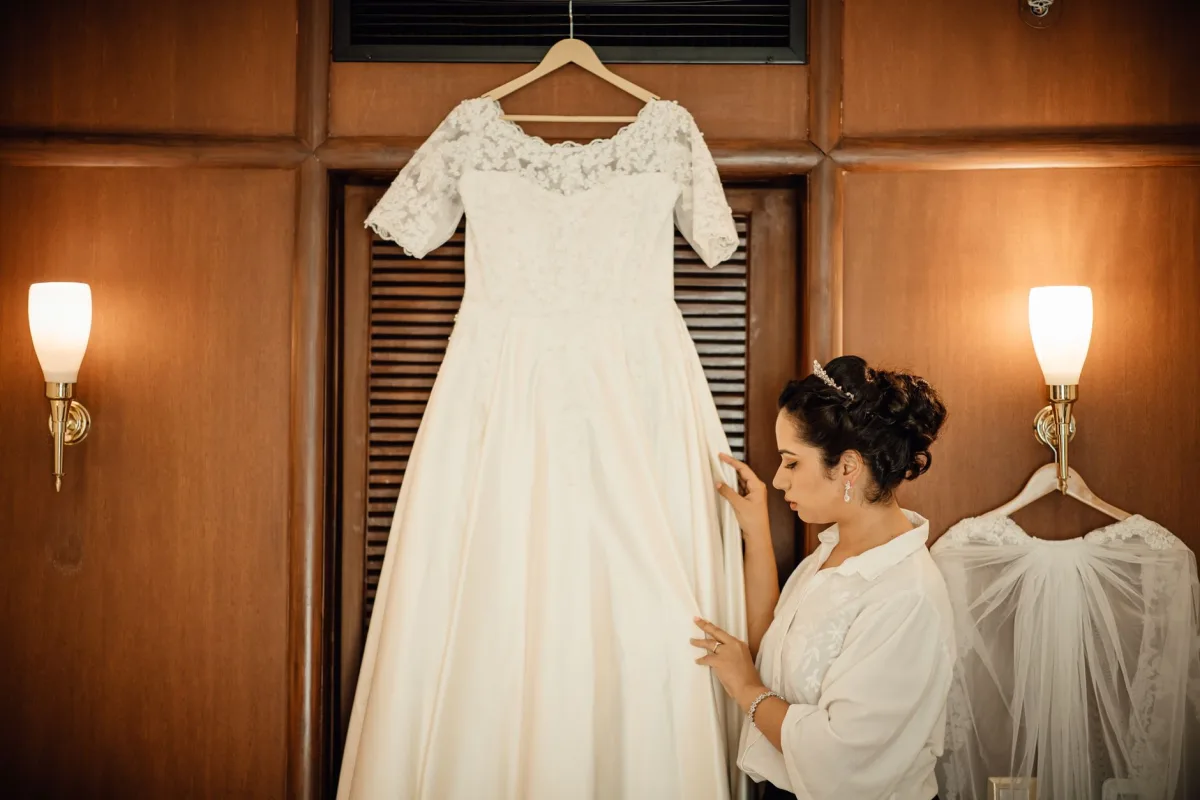
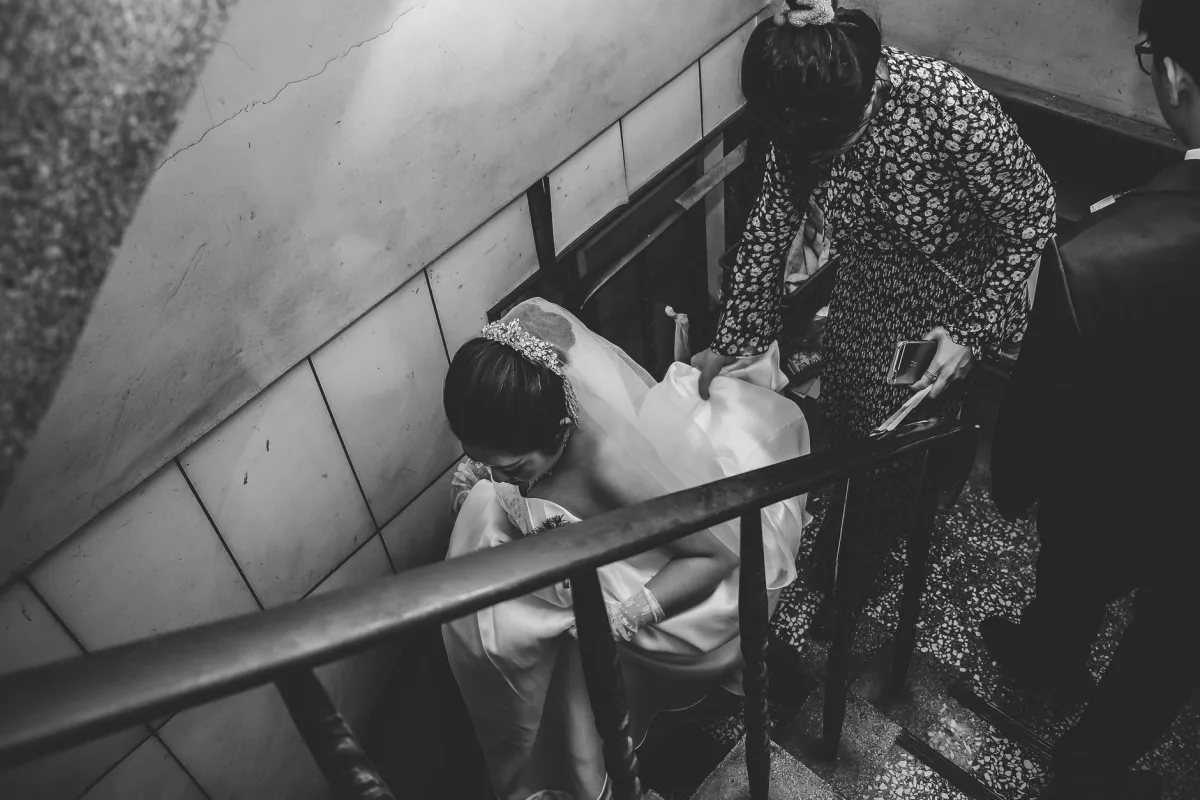
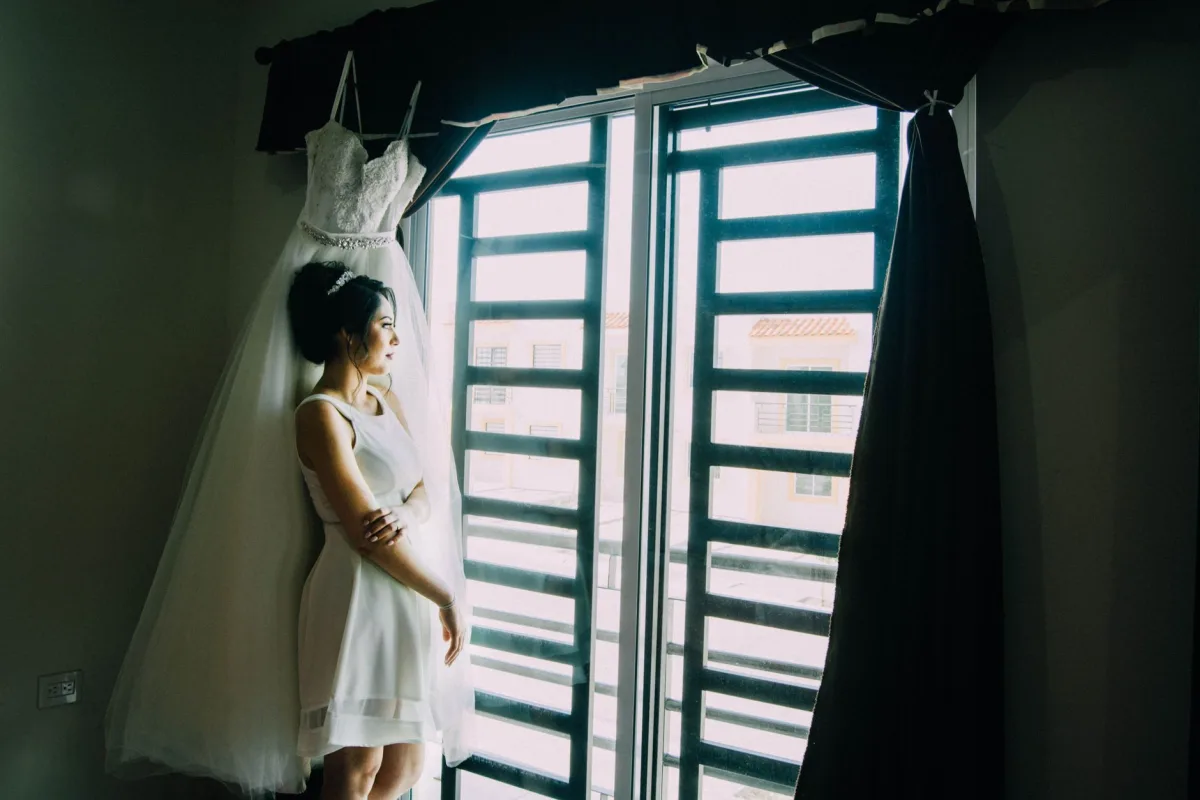
After the silhouette, the neckline is the detail that does the most work, because it sits closest to your face and shapes nearly every photograph. As the reference on necklines describes, there is a wide vocabulary of shapes, and each draws the eye differently and pairs better with some jewellery than others.
Sweetheart
A soft, curved dip that echoes the top of a heart. Romantic and flattering to many figures, and a long-standing bridal favourite.
V-neck
A downward point that lengthens the neck and frames a pendant beautifully. Elegant and versatile across silhouettes.
Straight or bandeau
A clean horizontal line across the top of the bodice. Modern, minimal and striking, pairing well with statement earrings.
Bateau or boat
A high, wide line that skims the collarbones. Refined and understated, and lovely with a simpler jewellery choice.
Let the neckline lead your jewellery rather than the other way around. A high or covered neckline calls for earrings over a necklace, while a lower neckline leaves room for a pendant. Our guide to bridal jewellery sets covers how to balance the pieces so nothing competes.
Fabric, drape and comfort
Fabric decides how a gown moves, how warm it is and how it photographs, and it deserves as much thought as the shape. Structured fabrics such as satin and mikado hold a sculpted silhouette and suit a formal ball gown, while fluid fabrics such as crepe and chiffon fall softly and suit a column or empire line. Layered tulle creates volume and romance, and lace adds texture and detail over any base.
Match the fabric to your season and venue as much as to your taste. A heavy satin gown is glorious in a winter hall and punishing at a summer beach, while a light chiffon that floats in the heat can feel flimsy in a grand indoor setting. Think, too, about a full day of wearing it: you will stand, sit, hug and dance for hours, so a fabric and shape you can genuinely move in will always look better than one you have to endure.
Reading your venue and season
The gown does not exist in isolation; it has to belong to the day around it. A grand ball gown suits a ballroom or cathedral and can feel out of place on a beach or in a garden, while a relaxed column or empire gown at home in an outdoor setting can look lost in a formal hall. Before you commit, picture the gown in the actual room and light of your wedding, not just in the boutique mirror.
Season shapes fabric, sleeves and weight. Warm-weather weddings favour lighter fabrics, breathable layers and perhaps a shorter or less structured skirt, while cooler seasons open the door to richer fabrics, longer sleeves and heavier trains. If you would like the shade conversation too, since white itself comes in several tones, our guide to white wedding gowns covers choosing the right white for your skin, and the broad guide to wedding gowns gives the wider view across every colour and style.
Budget and where the money goes
Wedding gowns span an enormous range, and deciding your budget before you shop saves both money and heartache, since it is far easier to avoid falling for a gown outside your means than to forget one you have already tried. As a broad orientation, a simple off-the-rack gown is modest, a boutique or lightly customised piece sits in the middle, and a designer or heavily embellished couture gown runs to many times that. There is a beautiful option at every level.
Crucially, the sticker price is not the full cost. Alterations are almost always needed and can add a meaningful amount, and accessories such as a veil, shoes and jewellery add more, so budget for the complete outfit rather than the gown alone. Renting a gown, buying off the rack and altering it well, or re-styling a family gown are all respectable ways to look wonderful for less. Whatever you choose, confirm the total including alterations before you commit.
Timeline, fittings and alterations
Time is the quiet ingredient that makes gown shopping calm rather than frantic. Many gowns are made to order with long lead times, so starting around eight to twelve months ahead is comfortable for a formal wedding, and even an off-the-rack gown needs weeks for alterations. Leaving it late narrows your choices and forces rushed fittings, which is where regret usually creeps in.
Almost no gown fits perfectly straight away, and this is not a flaw: a good tailor is the difference between a dress and your dress, taking in, letting out, hemming and adjusting until it moves with you. Plan for two or three fittings, keep your undergarments and shoes consistent across them so the fit stays true, and leave a final fitting close to the day to catch any last change. When the gown is chosen, our overview of bridal attire and preparation shows how it fits into the wider timeline of the day, and the guide to the wedding gown for the bride looks at the experience of wearing it on the day itself.
Frequently asked questions
How do I choose the right wedding gown silhouette?
Start with the silhouette before any other detail, because it shapes every choice that follows. The A-line is the most universally flattering and comfortable, ball gowns make the grandest statement, mermaid shapes emphasise curves, and column or empire lines read modern and relaxed. Think about the line you want to create rather than a body-shape label, and try several shapes in person, since gowns behave very differently on a real body than in a photograph.
When should I start shopping for my wedding gown?
For a formal wedding, around eight to twelve months ahead is comfortable, because many gowns are made to order with long lead times, and even an off-the-rack gown needs weeks for alterations. Starting early gives you the widest choice and unhurried fittings. Leaving it late narrows your options and forces rushed adjustments, which is a common source of stress and regret.
How much do alterations add to the cost of a gown?
Alterations are almost always needed and can add a meaningful amount on top of the gown's price, since a good tailor takes in, hems and adjusts the fit over two or three fittings. The sticker price is rarely the full cost, so budget for alterations, plus accessories like a veil, shoes and jewellery, as part of the complete outfit. Always confirm the total including alterations before committing.
Which neckline is most flattering for a wedding gown?
There is no single most flattering neckline; each frames the face differently. The sweetheart is romantic and suits many figures, the V-neck lengthens the neck and frames a pendant, a straight or bandeau line is clean and modern, and a bateau skims the collarbones for an understated look. Let the neckline guide your jewellery: high necklines call for earrings, lower ones leave room for a necklace.
Does the gown need to match my venue and season?
Ideally yes. A grand ball gown suits a ballroom or cathedral but can feel out of place on a beach, while a light column gown at home outdoors may look lost in a formal hall. Season shapes fabric and sleeves too, with lighter fabrics for warm weather and richer ones for cooler months. Picture the gown in the actual room and light of your wedding before you commit, not only in the boutique mirror.