Oval Wedding Rings: The Complete Guide
Why the oval flatters, the one flaw to check before you buy, and how to set, pair and care for an oval wedding ring.
Of all the diamond shapes to surge in popularity over the last decade, the oval has been the quiet winner. It carries almost all the sparkle of a classic round stone, yet its elongated outline makes it look larger for the weight and lends a slender, elegant line to the finger. This guide is about oval wedding and engagement rings specifically: what makes the shape special, the one quirk you should know before you buy, how to set and pair it, and how to weigh its genuine advantages against its handful of drawbacks. If you love the idea of an oval but are not sure whether the hype survives contact with the facts, this is the honest version.
The short version
- An oval looks bigger than its weight. The elongated shape spreads the stone over a larger surface than a round of the same carat.
- It is a brilliant cut, so it sparkles almost like a round diamond, with far more fire than shapes like emerald.
- Watch for the bow-tie. A dark band across the centre is the one flaw to check for; a well-cut oval minimises it.
- It flatters the finger, lengthening and slimming the hand, which is a large part of its appeal.
What an oval wedding ring is
An oval wedding ring is a ring whose central stone is cut into an elongated, rounded oval outline. The shape is a diamond cut, which refers to the way a stone is faceted and shaped to interact with light, and it is not exclusive to diamonds: sapphires, moissanite, morganite and other gemstones are all cut into ovals too. The oval belongs to the family of "fancy shapes," meaning anything other than the standard round, and within that family it is one of the most popular precisely because it bridges the classic and the distinctive.
It is worth being clear on terms. Strictly, the oval shape is most famous on the engagement ring, the stone-set ring given at the proposal, while the wedding band exchanged at the ceremony is often a plainer companion. In everyday speech people call the whole stacked pair an "oval wedding ring," and this guide treats it that way. For the fuller picture of how engagement rings, wedding rings and bands relate, our pillar on wedding rings lays out the whole family.
Why the oval flatters
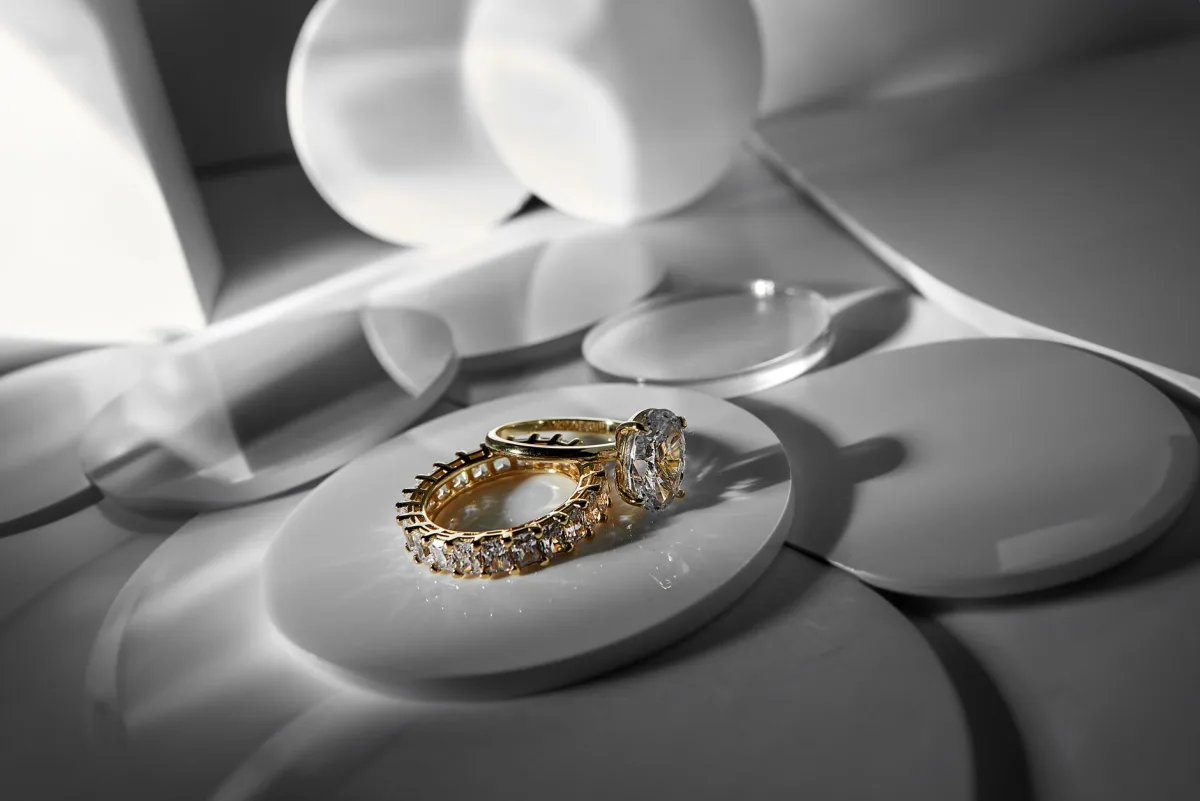
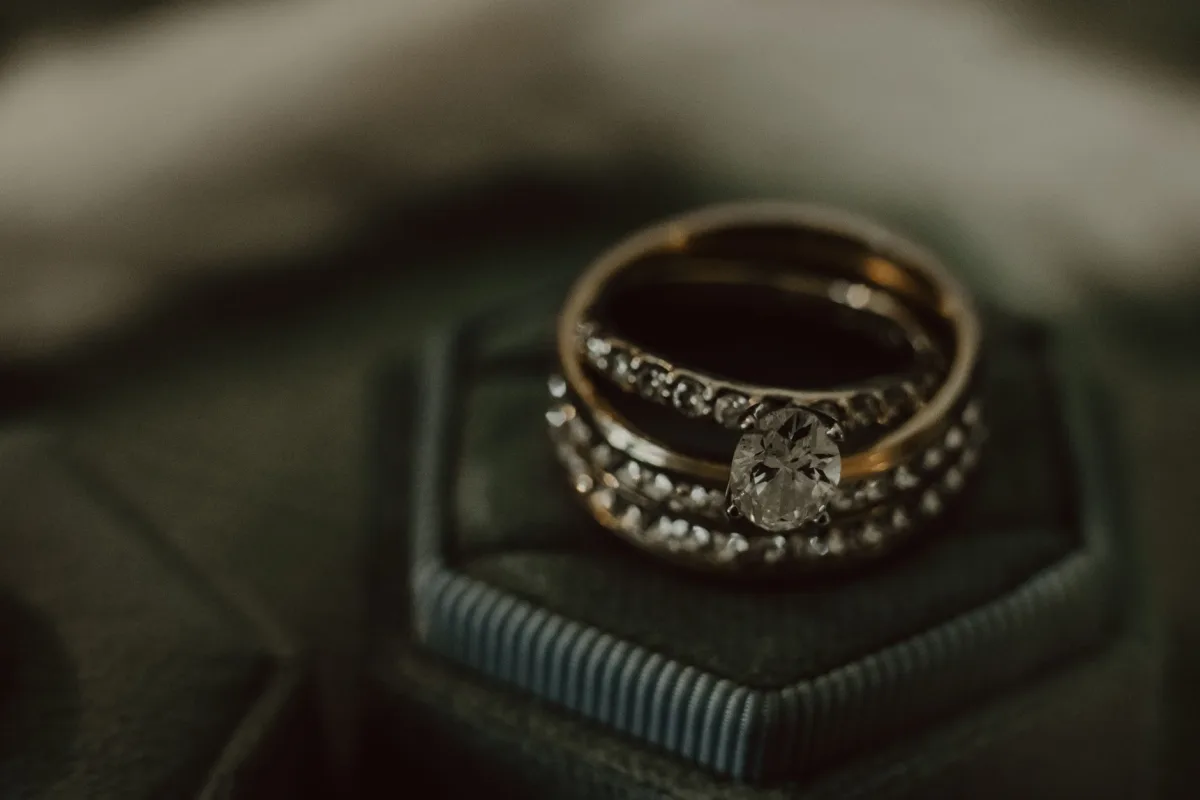
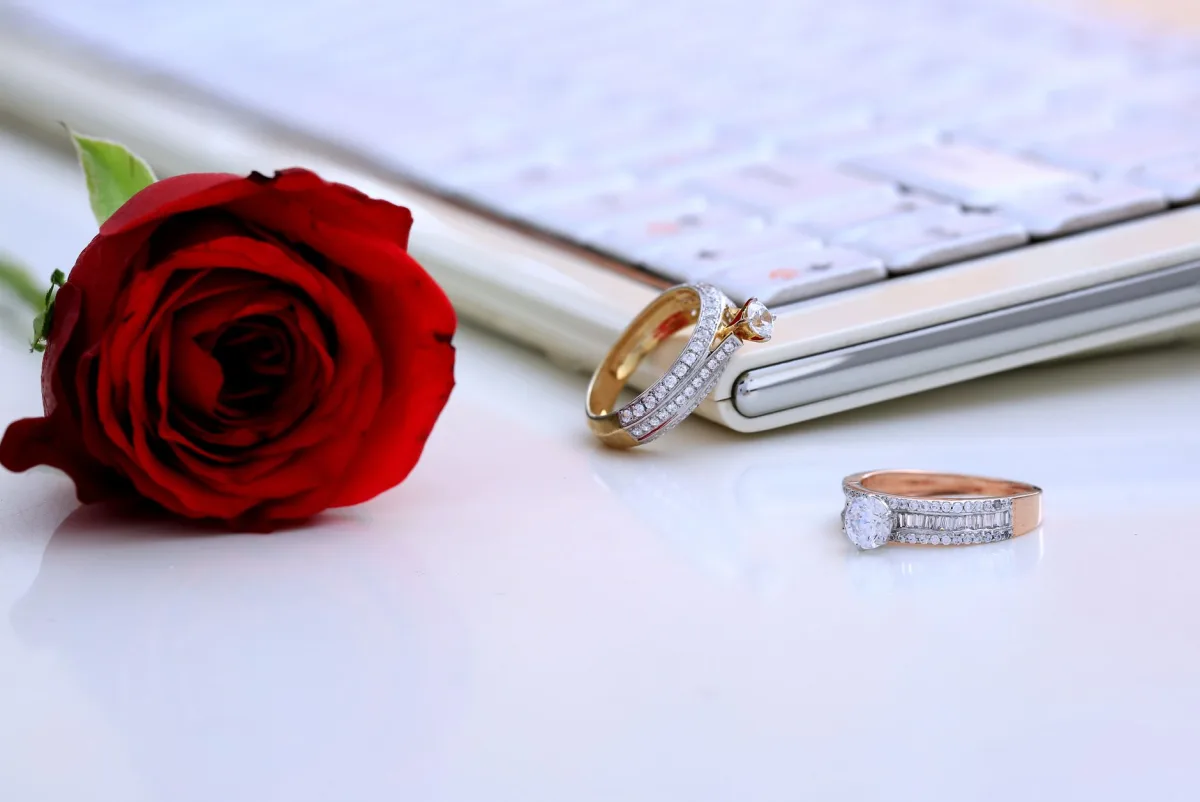
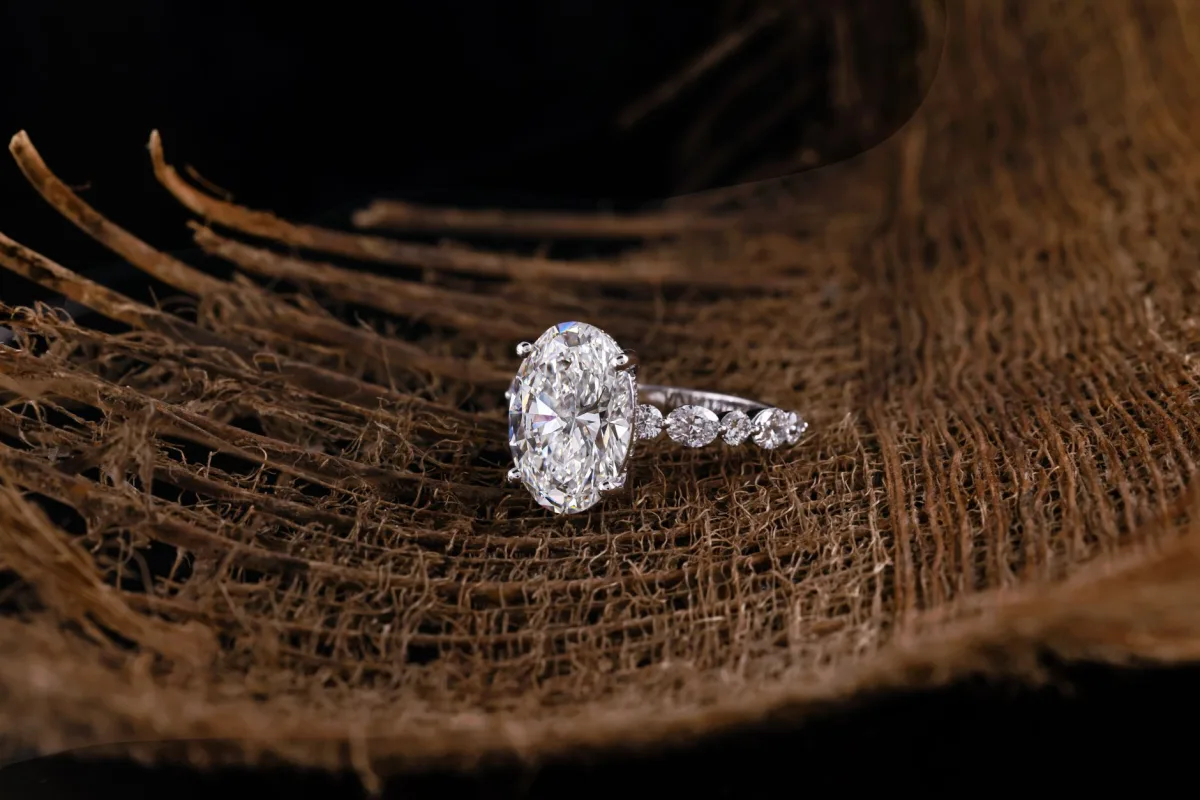
The oval's headline advantage is optical. Because the shape is elongated, a given weight of stone is spread across a longer surface than a compact round of the same carat, so an oval simply looks larger on the hand than a round diamond of identical weight. For a buyer who wants presence without paying for extra carats, that is a genuine, measurable benefit rather than marketing.
The second effect is on the hand itself. The long axis of an oval draws the eye down the finger, creating a lengthening, slimming line that many people find especially flattering on shorter or wider fingers. Worn with the long axis running along the finger, the stone elongates the whole hand. This combination, looking larger and lengthening the finger, is most of the reason the oval has become such a favourite, and it is a real aesthetic argument, not a trick.
Brilliance and the bow-tie
The oval is a modified brilliant cut, the same faceting family as the round brilliant that is engineered above all for sparkle. That means an oval returns a great deal of light and fire, far more than step-cut shapes like the emerald cut, whose long open facets prize clarity and a hall-of-mirrors elegance over dazzle. If you want a fancy shape that still sparkles hard, the oval is one of the best choices there is.
Brilliant cut
A faceting style with many small facets arranged to maximise the return of light. The oval, like the round, belongs to this family, which is why it sparkles so brightly.
The bow-tie effect
A dark shadow shaped like a bow tie across the centre of an elongated stone, caused by light leaking out instead of reflecting. Almost every oval has some; a well-cut one keeps it faint.
Length-to-width ratio
How elongated the oval is. Around 1.3 to 1.5 to 1 is a classic, balanced range; lower looks rounder, higher looks more slender and dramatic.
Cut quality
The single biggest driver of how a fancy shape looks. A well-cut oval hides the bow-tie and blazes with light; a poorly cut one looks dull and dark in the middle.
The one thing every oval buyer must do is look for the bow-tie: a shadowy band across the middle of the stone where light escapes rather than bouncing back to the eye. Unlike a round diamond, an oval's appearance is not fully captured by grading numbers, so you should view the actual stone or a video of it. A faint bow-tie is normal and adds character; a heavy, dark one is a flaw you will notice forever. Because so much rides on the cut, oval is a shape where seeing the individual stone matters more than trusting the certificate alone.
Choosing the setting
The setting is what holds the stone and protects it, and the oval's rounded shape gives it a practical edge: unlike shapes with sharp corners, such as the princess or marquise, an oval has no pointed tips to chip, so it wears more forgivingly on an everyday ring. A few settings suit it especially well.
- Solitaire. A single oval on a plain band, held by prongs. It shows the shape off cleanly and lets the stone look as large as possible.
- Halo. A ring of small stones surrounds the oval, making it appear even bigger and adding extra sparkle. A natural match for a shape already chosen for presence.
- Three-stone. The oval flanked by two smaller stones, often used to symbolise past, present and future. It adds width and meaning.
- Bezel. A metal rim wraps the whole stone. The most protective option for an active hand, and increasingly popular for its clean, modern look.
A common touch on oval settings is the east-west orientation, where the stone is set across the finger rather than along it, for a more modern, unexpected look. If you want something that steps further off the beaten path, our guide to unique wedding rings explores less conventional stones and settings.
Pairing the wedding band
An oval engagement ring is usually worn stacked with a wedding band, and getting the two to sit together neatly is its own small art. Because the oval's outline curves, some brides choose a contoured or curved band that nestles against the stone, while others prefer a straight band for a cleaner, more graphic contrast. A plain metal band keeps the focus on the oval; a diamond eternity band adds sparkle along the finger to match the stone. If you would rather buy the pair designed to fit from the start, a matched wedding ring set takes the guesswork out of the alignment. There is no single correct answer; hold the band against the ring and trust which pairing looks settled to your eye.
Metals and stones for an oval
The oval is versatile enough to suit any metal, so the choice comes down to the look you want. A cool white metal, white gold or platinum, keeps the eye on a colourless diamond and reads modern; yellow or rose gold warms the setting and pairs beautifully with a warmer-toned stone. Beyond diamond, the oval is a wonderful shape for coloured gemstones: an oval sapphire, emerald or morganite makes a distinctive, often more affordable centre stone, and lab-grown diamonds offer the same look as mined ones for considerably less. Whatever you choose, the metal and the shape are independent decisions, so settle the stone first and let the metal follow. Our overview of diamond wedding rings for women goes deeper on judging a diamond by its cut, colour, clarity and carat.
The honest trade-offs
No shape is perfect, and it is fairer to you to name the oval's drawbacks than to pretend it has none. The bow-tie effect, covered above, is the main one: every oval has some, and a poorly cut stone can have a distractingly dark centre. Ovals also show colour and inclusions a little more readily than a round brilliant does, particularly toward the pointed ends, so many buyers step up slightly in colour grade. And the elongated ends, while not sharp corners, still sit a fraction more exposed than a perfectly round stone, so the setting should protect them.
Set against those, the advantages are substantial: more apparent size for the weight, a flattering, lengthening effect on the hand, near-round levels of sparkle, and no sharp corners to chip. For most people the balance lands firmly in the oval's favour, which is exactly why it has become so popular. The deciding move is always to see the individual stone, because with an oval the cut quality is everything.
Caring for an oval ring
An oval ring asks for the same gentle care as any stone-set ring, with one extra habit. Clean it occasionally in warm water with a drop of mild soap and a soft brush, because a filmed-over stone loses its sparkle fast and an oval lives on its sparkle. Take it off for heavy manual work, the gym and harsh chemicals, and have a jeweller check the prongs every year or so, since a loose prong is cheap to fix and disastrous to ignore. Because the elongated ends sit slightly proud, an oval is worth that annual check more than a flush, protected stone. Insure a valuable ring, keep the paperwork, and the shape that looks larger than its weight will keep doing so for a lifetime.
The bottom line
An oval wedding ring gives you presence, sparkle and a flattering line on the hand, all from a shape that is classic enough to feel timeless and distinctive enough to feel personal. It looks larger than its carat weight, it lengthens the finger, and it dazzles nearly as hard as a round diamond. The only real homework is to view the actual stone and reject any with a heavy bow-tie, then pair it with a band that sits well and a metal you love. Do that, and you get one of the best-value, most flattering shapes in the whole world of rings.
Frequently asked questions
Do oval diamonds look bigger than round ones?
Yes. Because an oval is elongated, a given carat weight is spread over a larger surface area than a compact round diamond of the same weight, so the oval looks bigger on the finger. It also lengthens the appearance of the hand. This "more size for the weight" effect is one of the main reasons the oval has become so popular.
What is the bow-tie effect in an oval ring?
The bow-tie is a dark shadow, shaped roughly like a bow tie, that appears across the centre of an elongated stone where light leaks out instead of reflecting back to the eye. Almost every oval has some degree of it, and a well-cut stone keeps it faint. Because grading certificates do not fully capture it, you should always view the actual oval or a video of it before buying.
Are oval rings durable enough for everyday wear?
Reasonably, yes. Unlike shapes with sharp pointed corners, such as the princess or marquise, an oval has smooth rounded ends with no tips to chip, which makes it more forgiving for daily wear. Its elongated ends do sit slightly exposed, so a protective setting like a bezel or well-designed prongs and a yearly prong check are worth it, but overall the oval is a practical everyday shape.
What wedding band goes with an oval engagement ring?
Both curved and straight bands work. A contoured band nestles against the oval's curved outline for a seamless fit, while a straight band gives a cleaner, more graphic contrast. A plain metal band keeps the focus on the stone, and a diamond eternity band adds matching sparkle along the finger. Buying a matched set designed to fit together removes the guesswork of aligning the two.
Does an oval have to be a diamond?
Not at all. The oval is a cut, not a stone, and it suits many gemstones. Oval sapphires, emeralds, morganite and moissanite all make beautiful, often more affordable centre stones, and lab-grown diamonds give the same look as mined ones for considerably less. Choose the stone first, then the metal and setting to suit it.