Wed Florist Near Me: How to Choose the Right One (2026 Local Guide)
Turn a 'near me' search into the right florist: shortlist, compare, ask the right questions and book with confidence.
Typing "wed florist near me" into a search bar is easy. Working out which of the names that come back is right for your day is the hard part. A wedding florist is not a shop you buy from once and forget: they shape the mood of your ceremony, dress your reception, and quietly hold one of the most visible parts of your budget. This local guide walks you through how to shortlist, compare and book the florist near you who fits your style, your season and your spend, and the questions that separate a safe choice from a costly one.
The short version
- Local matters more than you think. A nearby florist knows your venues, your climate and which blooms are actually in season where you live.
- Shortlist three, not thirty. Compare portfolio, availability on your date, and a written quote before you fall for anyone's Instagram.
- Ask what the price includes. Delivery, setup, hire items and takedown are where quotes quietly diverge.
- Book early for popular dates. The best local florists take a limited number of weddings per weekend and fill up months ahead.
Why "near me" is the right instinct for a florist
Searching locally for a florist is not laziness, it is good sense. Flowers are perishable, heavy and time sensitive, and a supplier who works near your venue has real advantages over one you found because their photographs looked pretty from three hundred miles away. Floristry, the trade of growing, arranging and selling flowers, is deeply seasonal and regional, and a local florist knows which blooms thrive in your area and your month rather than which have to be flown in at a premium.
A nearby florist also knows the rooms. They have likely dressed your shortlisted venues before, so they understand the ceiling heights, the light, the load-in doors and the rules the venue enforces on candles, hanging installations and takedown times. That familiarity saves you from nasty surprises on the day. And because delivery distances are short, your arrangements arrive fresh rather than having spent hours in a hot van. If you are still choosing where to marry, our overview of wedding venues pairs naturally with this: pick the room first, then the florist who already knows it.
What a wedding florist actually does
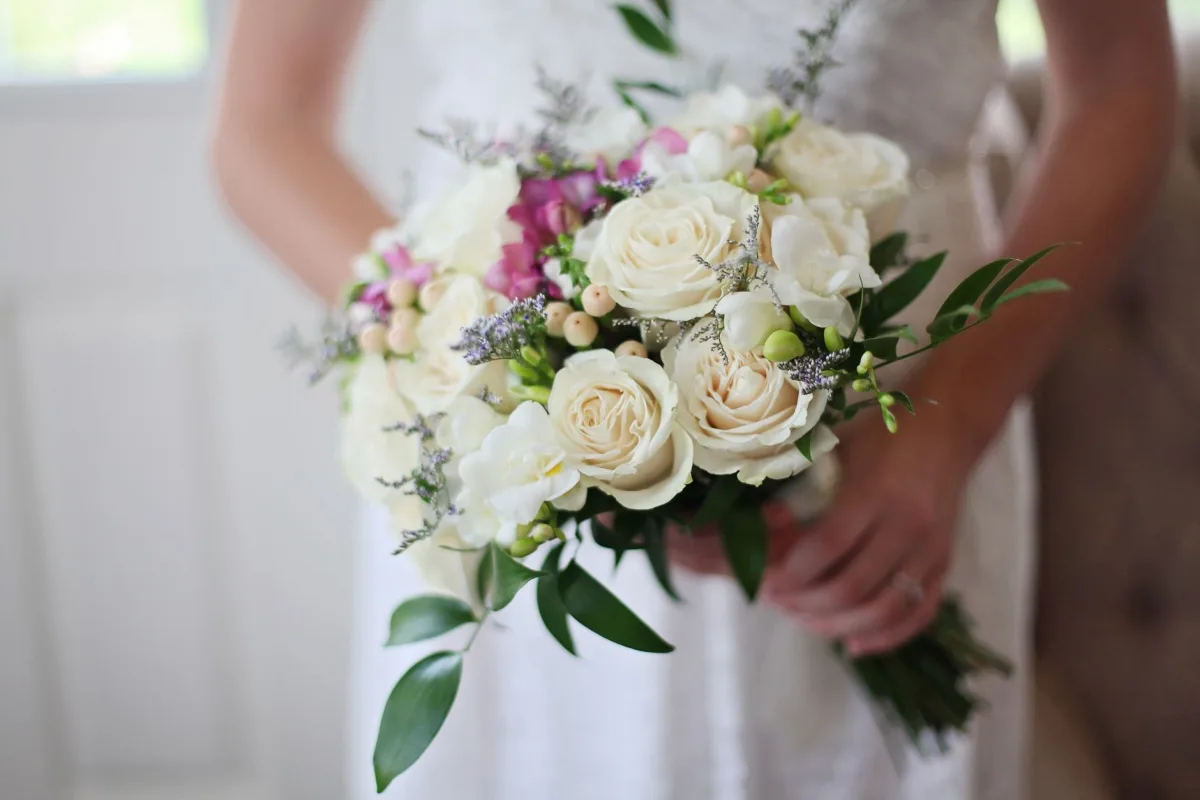
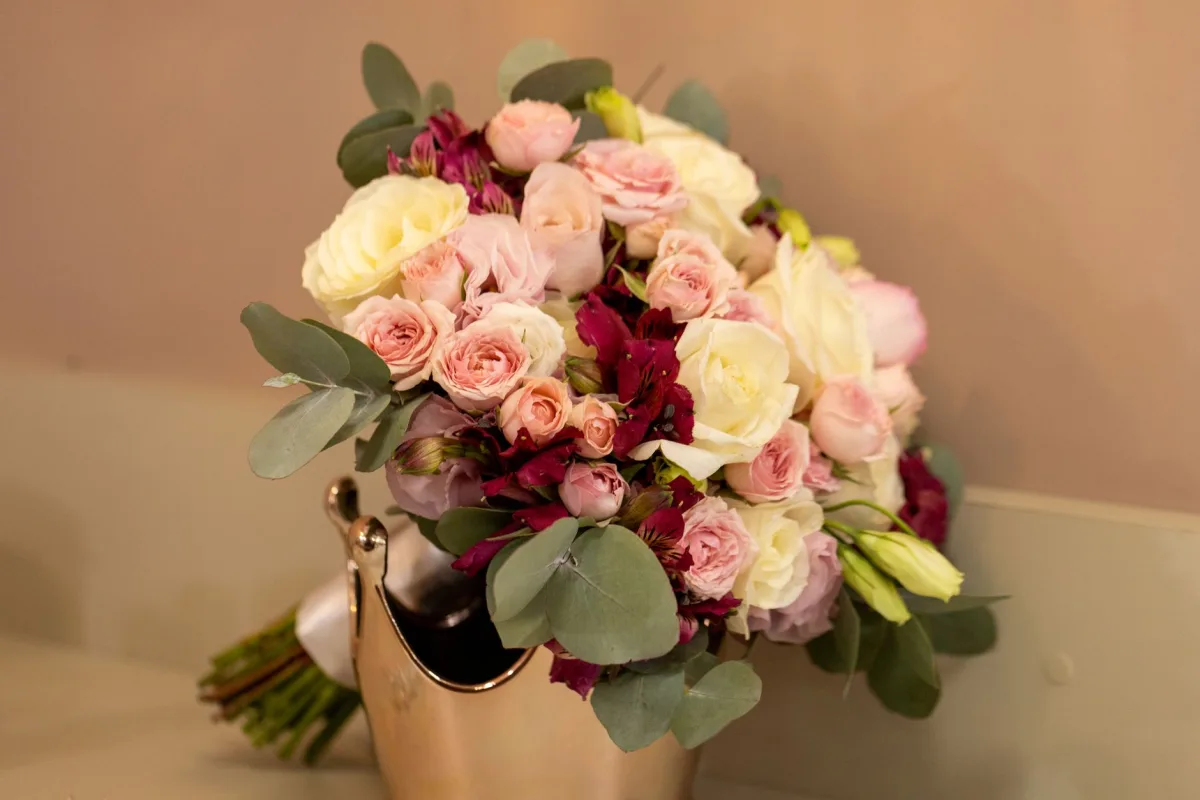
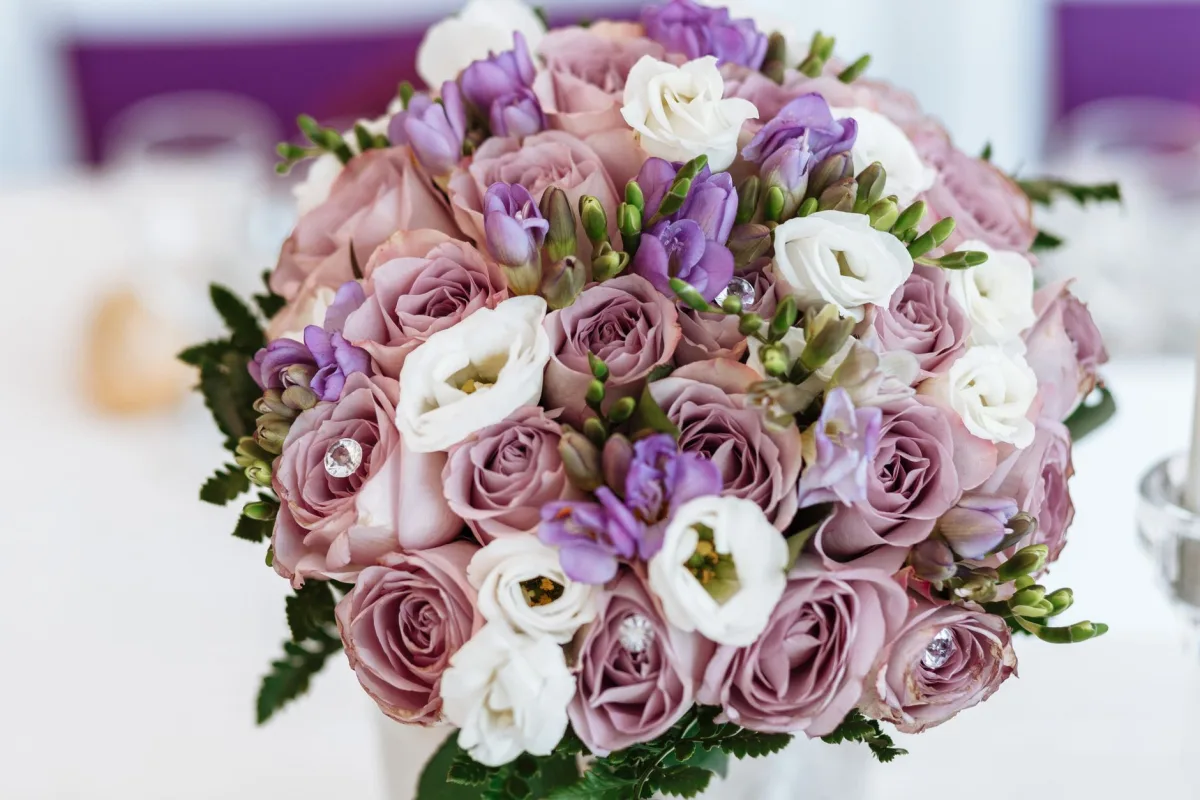
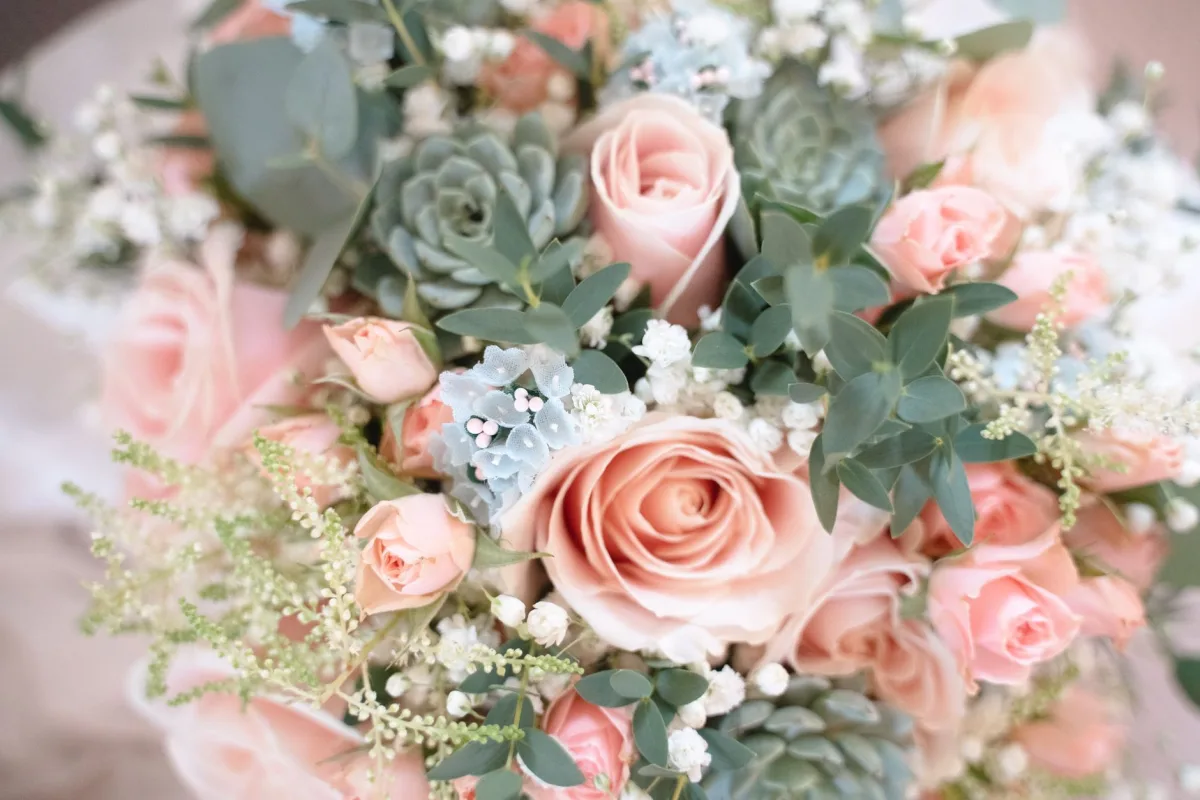
It helps to know the scope before you compare quotes, because "flowers" covers far more than the bouquet in your hands. A full-service wedding florist designs, sources, conditions, arranges, delivers, installs and often removes every floral element of the day. Knowing the vocabulary lets you read a quote and spot what is missing.
Personal flowers
The bridal bouquet, bridesmaids' posies, buttonholes, corsages and flower-crown pieces. Small in size, high in visibility, and photographed more than anything else.
Ceremony flowers
Aisle arrangements, an arch or backdrop, altar or mandap pieces, and pew or chair ends. Often the pieces that can be moved and reused at the reception.
Reception flowers
Centrepieces, top-table runners, cake flowers, bar and entrance displays. This is usually the largest single line on the quote.
Delivery, setup and takedown
Getting everything to the venue, installing it safely, and clearing it afterwards. Some florists include this; others charge it separately, so always check.
Hire items
Vases, arches, plinths, candelabra and stands you rent rather than keep. Cheaper than buying, but they must be returned undamaged.
Design and consultation
The creative work of building a colour palette and a look that ties the whole day together. Good florists treat this as a craft, not an afterthought.
A florist who quotes only for the bouquet and centrepieces, with no line for delivery or takedown, is not necessarily cheaper: they may simply have left costs off the page that will appear later. Our fuller guide to wedding florists breaks down each of these elements in more depth if you want the complete picture before you meet anyone.
How to build a shortlist of local florists
A search returns dozens of names. Your job is to narrow that to three you would genuinely trust, because comparing three properly beats collecting quotes from a dozen and comparing none of them well. Work through these filters in order.
- Availability on your date first. There is no point admiring a portfolio if they are already booked for your weekend. Ask this in your very first message.
- Portfolio that matches your style. Look for real weddings, not stock photography. A florist who shines at wild, loose, garden-style arrangements may not be the one for a structured, formal look, and the reverse is just as true.
- Reviews from your area. Recent, specific reviews that name local venues tell you far more than a perfect star average with no detail.
- Budget honesty. A florist who will talk openly about minimum spends and realistic ranges before you meet is one who respects your time.
- Responsiveness. How quickly and clearly they answer your first enquiry is a fair preview of how they will communicate in the stressful final month.
Keep your longlist to five or six, then request quotes from three. If you are assembling other local suppliers at the same time, the same discipline applies to all of them; our local guide to choosing a wedding florist near you covers the vetting process in parallel and is worth reading alongside this one.
Questions to ask before you book
A consultation is a two-way interview. The florist is working out whether your vision is realistic; you are working out whether they are the right hands for it. Bring these questions and listen as much to how they answer as to what they say.
- Have you worked at my venue before? Local experience of the exact room removes a whole category of risk.
- What is in season on my date? A good florist will steer you toward blooms that are naturally available then, which look better and cost less.
- What does the quote include, line by line? Delivery, setup, hire, takedown and any travel or minimum spend should all be visible.
- Can we reuse ceremony flowers at the reception? Moving an arch or aisle pieces into the reception room stretches the budget without looking cheap.
- What is your substitution policy? Flowers are natural and a market can fail. Ask what happens if a specific bloom is unavailable that week.
- When is the balance due and what is your cancellation policy? Know the deposit, the final payment date and what you lose if plans change.
Understanding the price of wedding flowers
Flowers are one of the more variable lines in any wedding budget, and honest ranges are more useful to you than a single headline figure. As a broad guide, personal flowers and a modest set of centrepieces sit at the lower end, while full-room installations, hanging features and large arches climb quickly. Where you live, your season and your guest count all move the number, so treat any figure you read online as a starting point to test against real local quotes, not a promise.
Several levers genuinely lower the cost without making the day look thrifty. Cut flowers that are in season and grown near you are cheaper than imported, out-of-season stems. Choosing fewer, larger statement pieces instead of many small ones often reads as more luxurious and costs less to build. Reusing ceremony arrangements at the reception effectively doubles their value. And greenery, foliage and seasonal branches can fill space beautifully at a fraction of the price of premium blooms. A local florist who knows the wholesale market can guide all of these choices better than a price list ever will.
Flowers rarely sit alone in the decor budget, so it helps to see them beside the rest of the room. Our galleries of wedding floral decoration ideas and broader wedding decoration ideas show how blooms, linens, lighting and stationery add up to a single, coherent look rather than a collection of separate purchases.
Timing: when to book your florist
Good local florists take a deliberately limited number of weddings each weekend, because quality floristry cannot be mass produced on a Saturday morning. That scarcity is exactly why popular ones book out early. For a peak-season date, reaching out nine to twelve months ahead is sensible; for quieter months you have more room, but the best names still fill first. Secure your venue and your date, then make the florist one of your earliest bookings rather than a last-minute scramble.
Once booked, expect a rhythm of contact: an initial consultation to agree the vision and quote, a period of refinement as your other decisions firm up, and a final meeting a few weeks out to confirm numbers, colours and the day-of timeline. If you are keeping track of every supplier deadline, dropping the florist milestones into a running wedding planning checklist keeps this from slipping through the cracks amid everything else.
Where matrimony360 fits in
A florist is one supplier in a day made of many, and the whole thing goes more smoothly when the pieces are chosen to work together rather than in isolation. matrimony360 gathers guides across venues, vendors, planning and style so you can research your florist in the same place you research your room, your photographer and your budget, and see how each decision leans on the others. Use this local guide to shortlist wisely, ask the right questions, and book with confidence, and the "near me" search that started it all ends with the right flowers in the right room on the right day.
Frequently asked questions
How far in advance should I book a wedding florist near me?
For a popular, peak-season date, aim to book nine to twelve months ahead, because good local florists limit how many weddings they take each weekend and fill quickly. For an off-peak date you have more flexibility, but the strongest names still book first. Secure your venue and date, then make the florist one of your earliest supplier decisions rather than leaving it late.
Why choose a local florist over one further away?
Flowers are perishable and time sensitive, so short delivery distances mean fresher arrangements. A local florist also knows your venues, your climate and which blooms are genuinely in season where you live, which improves the look and lowers the cost. They can visit the room, understand its rules and load-in, and reach you easily for consultations, all of which a distant supplier cannot match.
What should a wedding florist quote include?
A complete quote itemises personal flowers, ceremony pieces and reception arrangements, plus delivery, setup, any hire items such as vases or arches, and takedown. It should also state any travel charge, minimum spend, the deposit, the final balance date and the substitution policy. If a quote lists only the bouquet and centrepieces, ask what has been left off before you compare it with others.
How can I reduce the cost of wedding flowers?
Choose blooms that are in season and grown locally, which are cheaper than imported, out-of-season stems. Opt for fewer, larger statement pieces rather than many small ones, and reuse ceremony arrangements at the reception. Foliage, greenery and seasonal branches fill space beautifully for less. A local florist who knows the wholesale market can guide all of these choices to stretch your budget without the day looking thrifty.
What questions should I ask at a florist consultation?
Ask whether they have worked at your venue, what is in season on your date, exactly what the quote includes, whether ceremony flowers can be reused at the reception, and what happens if a specific bloom is unavailable. Also confirm the deposit, the final payment date and the cancellation policy. How clearly and quickly they answer is itself a good preview of working with them.