Wedding Catering: The Complete Guide
Service styles, in-house versus external caterers, what quotes really include, per-head costs, tastings and choosing a caterer with confidence.
Ask guests what they remember about a wedding and, alongside the couple and the first dance, the food comes up again and again. Wedding catering is the part of the day that feeds a room full of people you love, sets the pace of the reception, and often takes the largest single share of the budget after the venue. It is also one of the more confusing areas to plan, full of service styles, per-head pricing and fine print. This guide is the complete overview: what catering covers, how the styles differ, what it tends to cost, and how to choose a caterer you can trust with the meal of the year.
The short version
- Service style shapes the whole meal. Plated, buffet, family-style and stations each set a different mood, pace and price.
- Price is per head, so guest count rules. Fewer guests or a lighter service cuts the catering bill fastest.
- The quote is rarely the whole cost. Staff, rentals, service charge, cake-cutting and drinks can all sit on top.
- Always taste before you book. A tasting confirms the food, the portions and the fit with your caterer.
What wedding catering actually covers
Catering is the business of providing food and drink service at an event, and for a wedding that means far more than cooking a meal. A full-service wedding caterer typically handles the menu, the food preparation and cooking, the serving staff, and often the tableware, glassware and linen, then sets up, serves and clears away on the day. Some also manage the bar and drinks service. In other words, catering is a service as much as a meal, and the difference between a smooth reception and a stressful one often lives in how much of that service is included.
It helps to picture catering as several linked decisions rather than one. There is the style of service, the menu itself, the drinks, the staffing, and the equipment, and each can be handled by the venue, by an outside caterer, or split between them. The wedding reception is built around this meal, so getting the catering right shapes the timing, the seating and the whole flow of the celebration. Start by knowing which pieces you are buying, and from whom.
The main service styles


How the food reaches your guests matters as much as what it is. Each service style carries a different cost, pace and feel, so this is one of the first choices to make.
Plated (sit-down)
Guests are served a set meal at their tables by staff. The most formal and often the priciest, thanks to the staffing it needs, but polished and easy to time.
Buffet
A buffet lets guests serve themselves from a spread. Relaxed, offers choice, and often cheaper on staff, though it needs space and can mean queues.
Family style
Large shared platters are placed on each table for guests to pass around. Warm and sociable, a middle ground between plated and buffet.
Food stations
Themed live stations around the room, from a pasta bar to a carvery. Interactive and modern, encouraging guests to mingle as they eat.
Cocktail reception
Passed and stationed hors d'oeuvres instead of a seated meal. Lively and space-efficient, ideal for a standing, mingling celebration.
Food trucks and casual
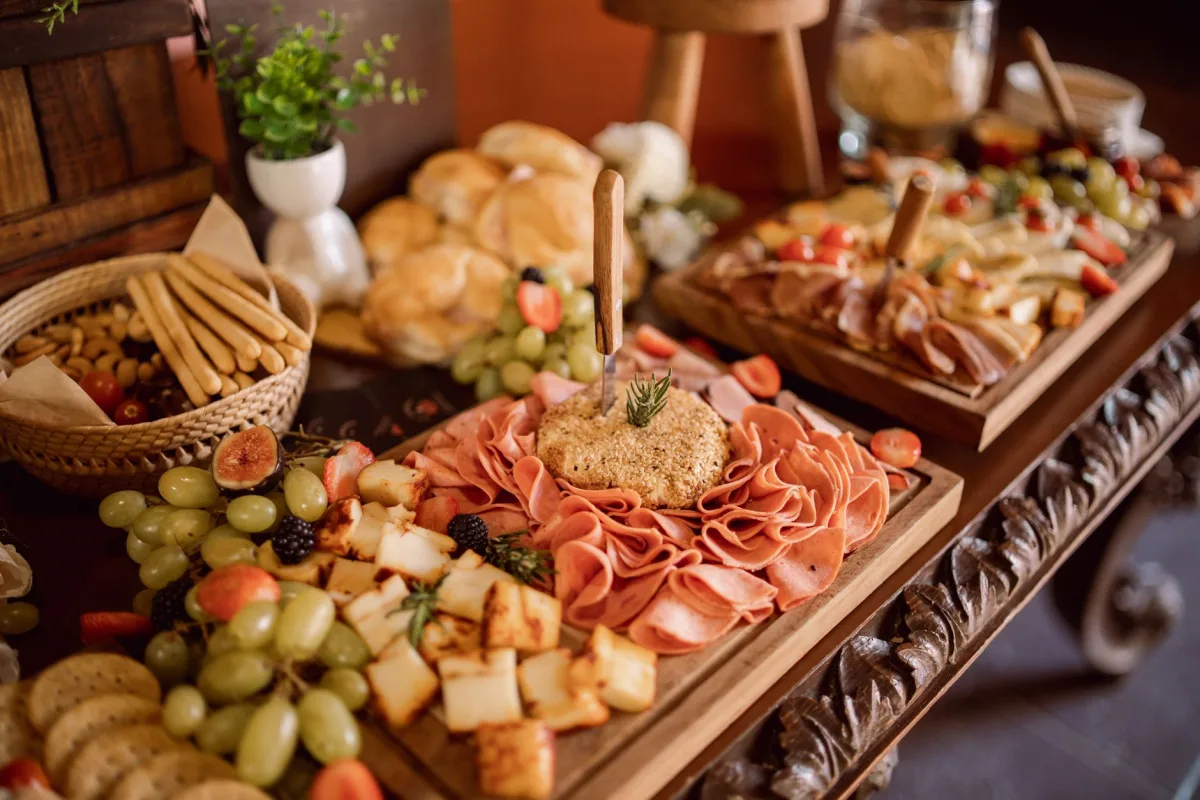
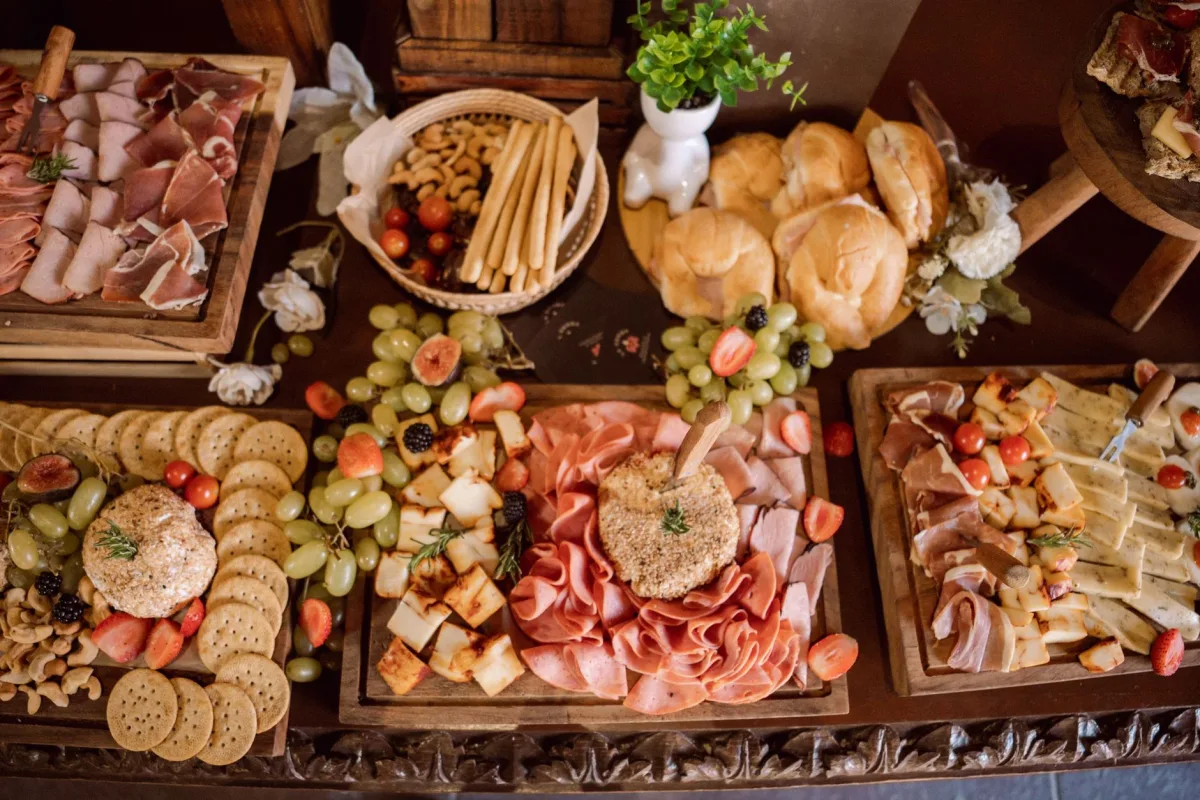
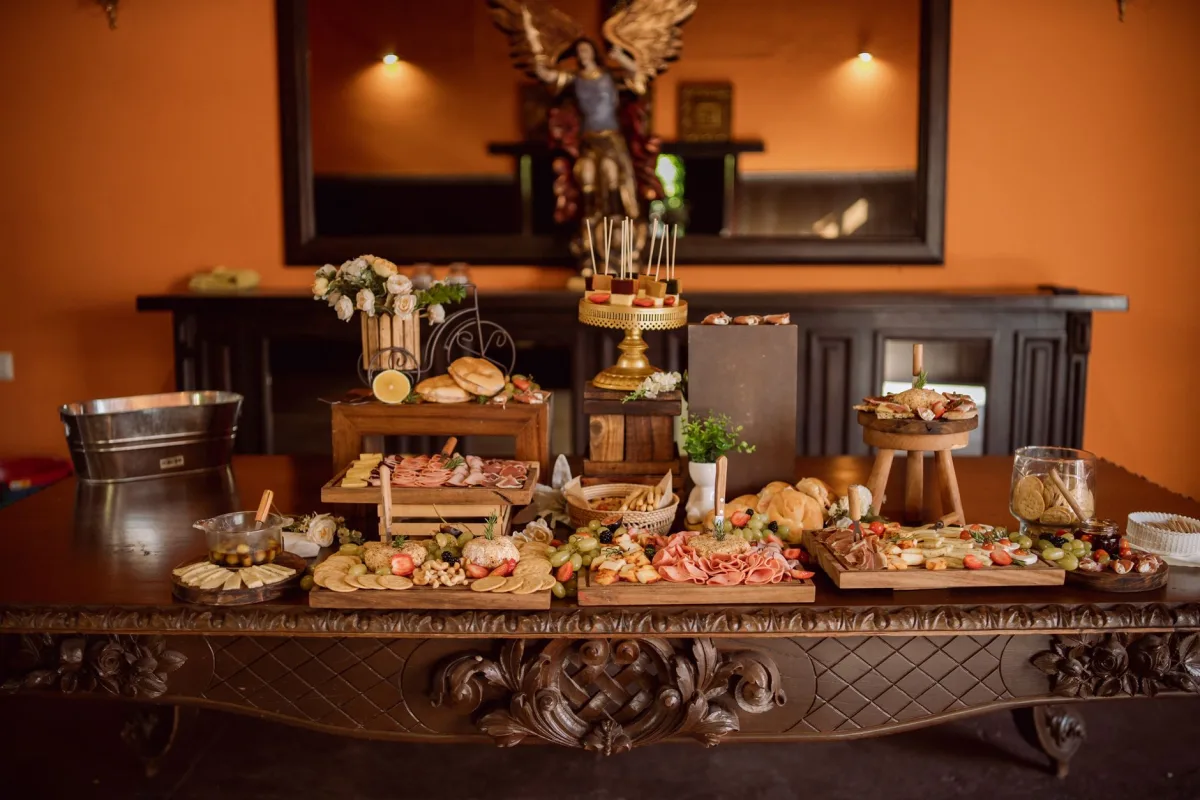
Trucks, grazing tables and street-food setups for a laid-back day. Fun and often cheaper, best suited to informal and outdoor weddings.
In-house versus external caterers
One of the earliest catering decisions is dictated by your venue: does it cater in-house, or do you bring in an outside caterer? Many hotels, banquet halls and all-inclusive venues provide their own catering, which is convenient because the kitchen already knows the space, the timing and the logistics, and there is one less contract to manage. The trade-off is less flexibility on menu and sometimes a higher price, since you cannot shop the food around.
Other venues, especially blank spaces, halls and outdoor sites, expect you to hire an external caterer, which gives far more choice over cuisine, style and budget. The catch is coordination: an outside caterer needs kitchen access or space to work, and you take on the job of making sure they and the venue agree on setup, power and cleanup. Some venues also keep an approved-supplier list or charge a fee to bring in your own. Whichever route your venue sets, confirm early what is included, because it changes both the budget and how much you personally have to manage. Our guides to wedding venues and all-inclusive wedding venues unpack how catering is usually bundled.
What is usually included, and what is not
The single most common catering surprise is assuming the quoted per-head figure is the whole bill. It often is not. Depending on the caterer, the headline price may or may not cover the serving and kitchen staff, the hire of tables, chairs, crockery, glassware and linen, a service charge or gratuity, the drinks and bar service, cake cutting and plating, and cleanup. Each of these can be a separate line, and together they can add a meaningful fraction to the base cost.
The fix is not complicated, but it is essential: ask for an itemised quote that spells out exactly what the per-head price includes and lists every extra by name. Then, when you compare two caterers, you are comparing the same thing rather than one all-inclusive figure against a bare food cost. Fold the full number into your overall plan with our wedding budget checklist, which keeps catering in proportion to the rest of the day, and cross-check it against your wedding planning checklist so the tasting, the final headcount and the balance payment all land at the right time.
How much wedding catering costs
Catering is almost always priced per guest, which makes it one of the most predictable big costs to model, and one of the most sensitive to guest count. Because of that per-head structure, the fastest way to change the total is to change the number of people, not to haggle over the menu. Trimming the list is worth more than any single negotiation, and it is why an intimate wedding feels so much lighter on the catering budget than a large one.
Actual figures swing hugely by region, service style and menu, so treat any number as a rough guide and get local quotes. As a general shape, casual formats like food trucks, grazing tables and buffets tend to sit at the lower end, family style in the middle, and a formal plated dinner with full service at the top, with drinks packages layered on separately. Season and day of the week matter too, as caterers, like venues, are busier and dearer in peak months. The honest takeaway is that catering can flex enormously, so decide your style and headcount first, then ask several caterers to price that exact brief.
Menus, tastings and dietary needs
A wedding menu has to please a crowd, not just the couple, which means balancing dishes you love with options that work for a wide range of tastes and needs. Modern catering is expected to handle vegetarian, vegan, halal, kosher, gluten-free and common allergies, and the best caterers do so gracefully rather than as an afterthought. Collect dietary requirements with your invitations, share them with the caterer well ahead, and make sure allergy information is clear on the day, because getting this right is a matter of safety as well as hospitality.
The tasting is where a menu stops being words on a page. A proper tasting, usually after you have shortlisted or booked a caterer, lets you check the flavour, the portion size, the presentation and how well the kitchen listens to your feedback. Go in with questions, taste the dishes you actually plan to serve, and pay attention to whether the caterer adapts to what you say. It is also your best read on the working relationship, which matters, because you are trusting these people with a room full of guests and no second chance. Seasonality is worth raising too: menus built around what is fresh and local at your time of year usually taste better and cost less.
How to choose a caterer
Once you know your style, headcount and rough budget, choosing between caterers comes down to a short set of checks. Start with availability for your date and experience with weddings of your size and style, then look at reviews and, if you can, photos of real events rather than only styled shots. Ask for an itemised quote, confirm what is and is not included, and clarify staffing ratios, timing and how they coordinate with your venue. A caterer who answers plainly and puts everything in writing is worth more than one with the glossiest brochure.
Treat the first conversation as a two-way interview: ask about their tasting process, how they handle dietary needs, their policy on final numbers and changes, deposit and cancellation terms, and what happens if something goes wrong on the day. Trust the tasting and trust the paperwork. Catering sits at the heart of the reception, so it deserves the same care as the venue itself, and it pairs naturally with the other big vendor decisions gathered in our overview of wedding reception venues and the bundled deals in our guide to wedding packages. Matrimony360 keeps these pieces together so the food never becomes an afterthought.
The bottom line
Wedding catering is a service, not just a meal: it feeds your guests, paces your reception and shapes a large slice of the budget. Choose the service style that fits the mood you want, understand whether your venue caters in-house or expects an outside caterer, and always insist on an itemised quote so the per-head price holds no surprises. Model the cost around your guest count, taste before you commit, plan for every dietary need, and pick a caterer who communicates clearly. Do that, and the food will be one of the day's happiest memories rather than one of its stresses.
Frequently asked questions
How much does wedding catering cost per person?
It varies widely by region, service style and menu, so treat any figure as a rough guide and gather local quotes. As a general shape, casual formats like buffets, grazing tables and food trucks sit at the lower end, family style in the middle, and a formal plated dinner with full service at the top, with drinks priced separately. Because catering is charged per head, the surest way to control the total is to manage your guest count rather than haggle over the menu.
What is the best catering style for a wedding?
There is no single best style, only the one that fits your budget, venue and the mood you want. Plated service is formal and polished but staff-heavy and pricier; buffet and family style are more relaxed and often cheaper; food stations and cocktail receptions encourage mingling; and food trucks suit a casual, outdoor day. Choose the style first, since it drives cost, pace and the feel of the whole reception, then build the menu to match.
Is a buffet cheaper than a plated dinner?
Often, yes, mainly because a buffet usually needs fewer serving staff than a plated meal, but it is not guaranteed. Buffets can require more food overall since guests serve themselves, and they need space and equipment for the display. A plated dinner controls portions precisely but costs more in service. The real answer depends on the caterer's pricing, so ask for an itemised quote for both styles and compare the true totals for your guest count.
Do I need a tasting before booking a caterer?
A tasting is strongly recommended, because it is the only way to confirm the flavour, portion size and presentation of the dishes you plan to serve, and to see how the caterer responds to your feedback. Some caterers offer a tasting before booking; others do so after a deposit. Either way, taste the actual menu where you can, bring your questions, and treat it as a read on the working relationship as much as the food, since catering is one decision you cannot redo on the day.
How do caterers handle dietary restrictions and allergies?
Established wedding caterers routinely cater for vegetarian, vegan, halal, kosher, gluten-free and common allergies, and the good ones do so as a matter of course rather than a favour. Collect dietary needs with your invitations, pass them to the caterer well in advance, and make sure allergy information is clear on the day. Confirm during your enquiry how they manage cross-contamination and special meals, since this is a safety issue as much as a matter of hospitality.